
The Sleep Training War No One Asked to Join
On the unspoken war being fought over every cot in Britain, and the woman trying to end it
There is a version of motherhood, still very much alive in 2026, that asks a woman to give until there is nothing left. Not sleep. Not solitude. Not the right to sit with a baby monitor and not feel, at 3am, that checking on a sleeping child eight times in one night is simply what devotion looks like. That figure is not an outlier. It is the reported behaviour of the majority of parents in their child’s first year, and exhaustion, not joy, is the emotion they name most often when asked how early motherhood actually feels.
The sleep training debate, when it surfaces online, tends to flatten into two camps shouting past each other. One insists that any structured approach risks a baby’s sense of safety, and that responsiveness must never be compromised, however exhausted a parent has become. The other insists that a family running on no sleep cannot function for long, and that some gentle structure benefits everyone in the house, the baby included. Both are usually right about something and wrong about the rest, and the parent standing at the cot at 3am rarely has the energy to referee the argument. They just want to know if they’re failing.
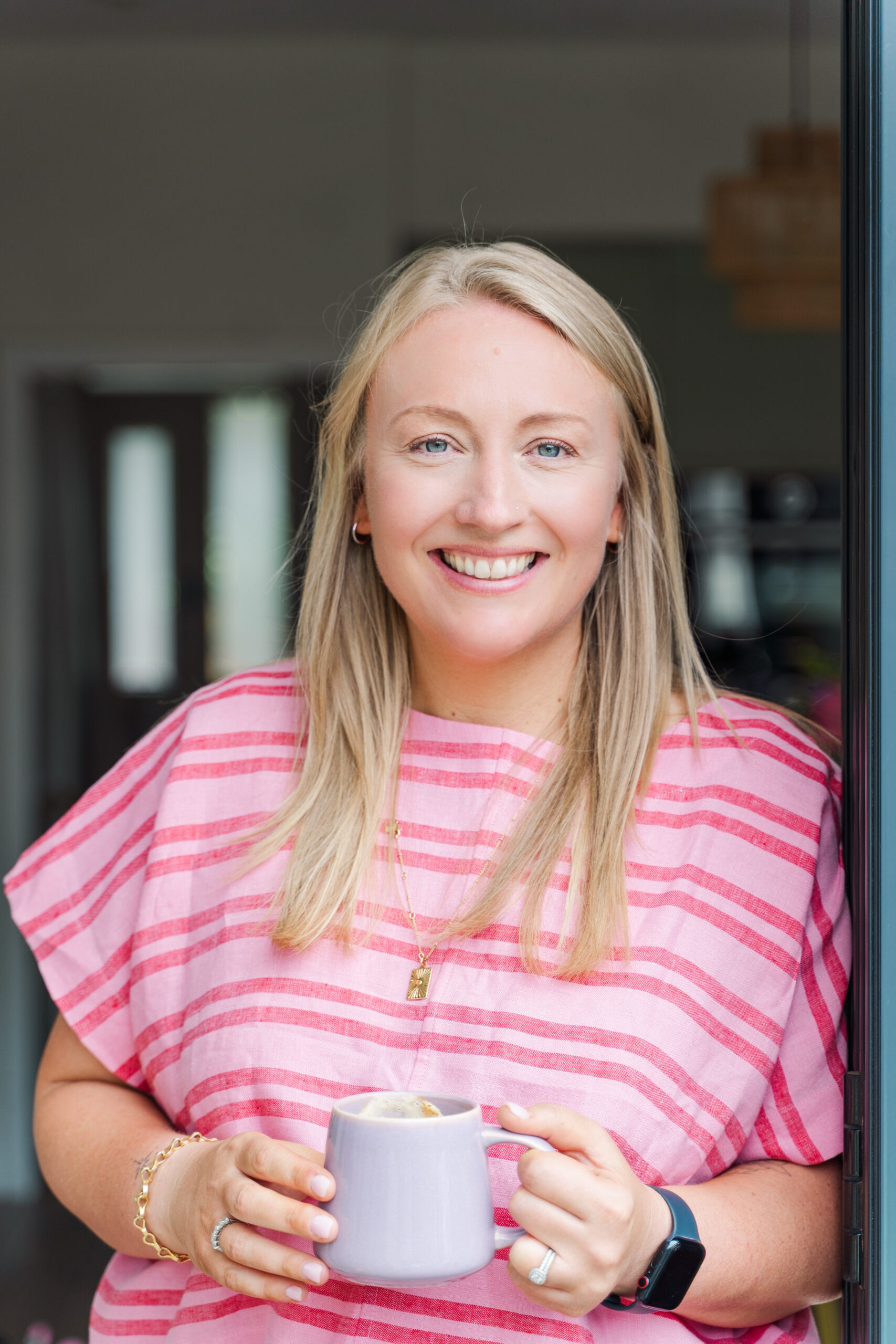
Gemma Davies, the founder of The Mindful Sleep Coach, has built a career on refusing to let that question go unanswered, and refusing, too, to answer it the way either camp would like.
A war fought in the smallest hours
The particular cruelty of the sleep training debate is that it arrives exactly when a parent has the least capacity to weigh it. Sleep deprivation is not simply tiredness. It erodes judgement, patience, the ability to hold a thought to completion, and it does all of this while every parenting forum, every well-meaning relative, every algorithm-fed reel insists on a different correct way to fix it, or worse, that exhaustion is simply the price of motherhood, something to endure in silence rather than something to address.
Gemma’s own introduction to this was not theoretical. Her eldest was born just before the country went into lockdown, into a world stripped of the ordinary infrastructure of new motherhood. No mother and baby groups. No grandmother arriving to hold the baby so she could shower undisturbed. No one to ask, in the blur of a bad week, whether what she was feeling was normal. What she felt, in her own words, was a nap anxiety so total it coloured everything.
She did not go on to build a method that promises to erase that feeling in seven days. She built a practice that starts by naming it.
The part the debate leaves out
What tends to get lost in the online sleep training wars is that almost no exhausted parent is actually asking for a philosophy. She is asking for someone to sit with her, look at her specific baby and her specific nights, and tell her, honestly, what her options are, without judgement attached to whichever one she chooses.
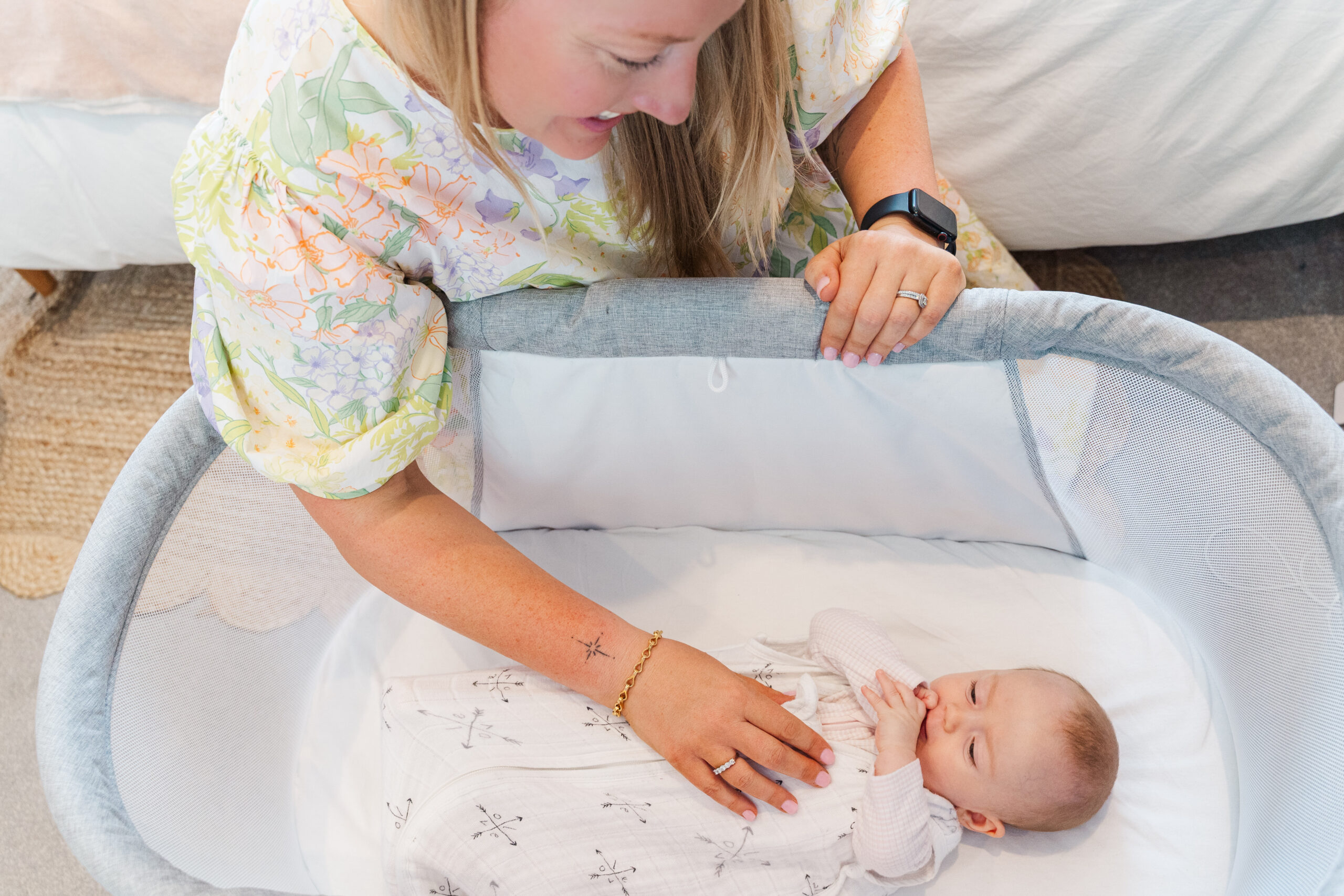
This is where Gemma’s work departs from both camps at once. She is neither the crusader against sleep training nor its evangelist. Her support runs from pregnancy through the toddler years, across everything from short naps and early wakings to reflux, regressions and the shift from cot to bed, and the approach bends to the family in front of her rather than the other way round. There is no single script, no ideology to convert to. What there is instead is the assumption, unfashionable in an industry that often sells certainty, that the parent’s exhaustion and fear are as much a part of the equation as anything the baby is doing, and that no plan survives contact with a household if it ignores that.
It is worth pausing on how genuinely holistic this is. Gemma doesn’t treat the baby’s sleep as separate from the parent’s exhaustion, nor does she treat either as the whole picture on its own. A conversation with her might start with how a mother is really doing, but it moves quickly into the practical: whether reflux or discomfort is disrupting a baby’s nights, what’s actually behind a toddler’s waking, which is often behavioural rather than physical, and what would genuinely help this particular family, not a generic one. The parent’s wellbeing and the baby’s comfort are treated as one picture, not two separate problems competing for attention.
What the number is really telling us
Return, for a moment, to that eight-times-a-night statistic. It is easy to read it as evidence of a generation of overanxious parents who simply need to relax. It is closer to the truth to read it as evidence of an entire structure of support that has gradually disappeared, the village that used to absorb some of the fear, now largely gone, leaving one exhausted parent, most often the mother, increasingly the father too, standing over a cot doing the checking that used to be shared.
Nobody in that position has failed. They have inherited a harder version of a very old job, with fewer hands to help carry it, and a culture still deciding, argument by argument, whether a good mother is allowed to want an easier night.
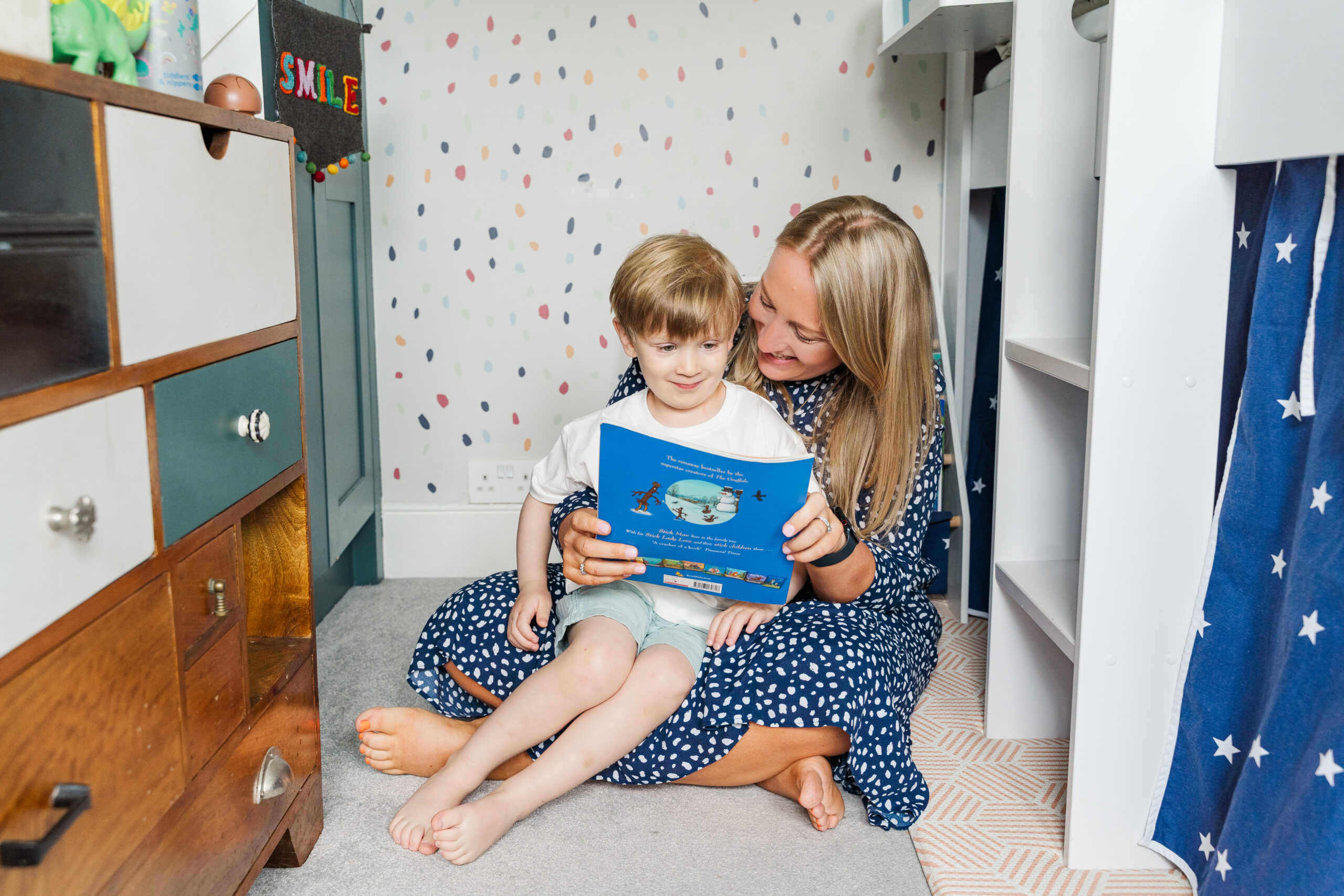
Gemma’s answer, offered without judgement and without a script, is simple enough to sound almost radical against the noise. Yes. And here is somebody who has stood exactly where you are standing, ready to help you find a way through that actually fits your family, rather than someone else’s rulebook.
Every engagement with her still begins the same unglamorous way it always has. Not a plan. A conversation. With someone who understands precisely how loud a silent room can be at 3am, and precisely how much it can cost a mother to feel, even briefly, that she is not the only one awake.
If tonight is one of those nights, the first conversation is easier to start than you might think. Find Gemma on Instagram at @themindfulsleepcoach, where she shares real stories from families she has worked with alongside the honest, judgement-free guidance she has built her practice on, or visit her website to read more about how she works and enquire about support for your own family.