
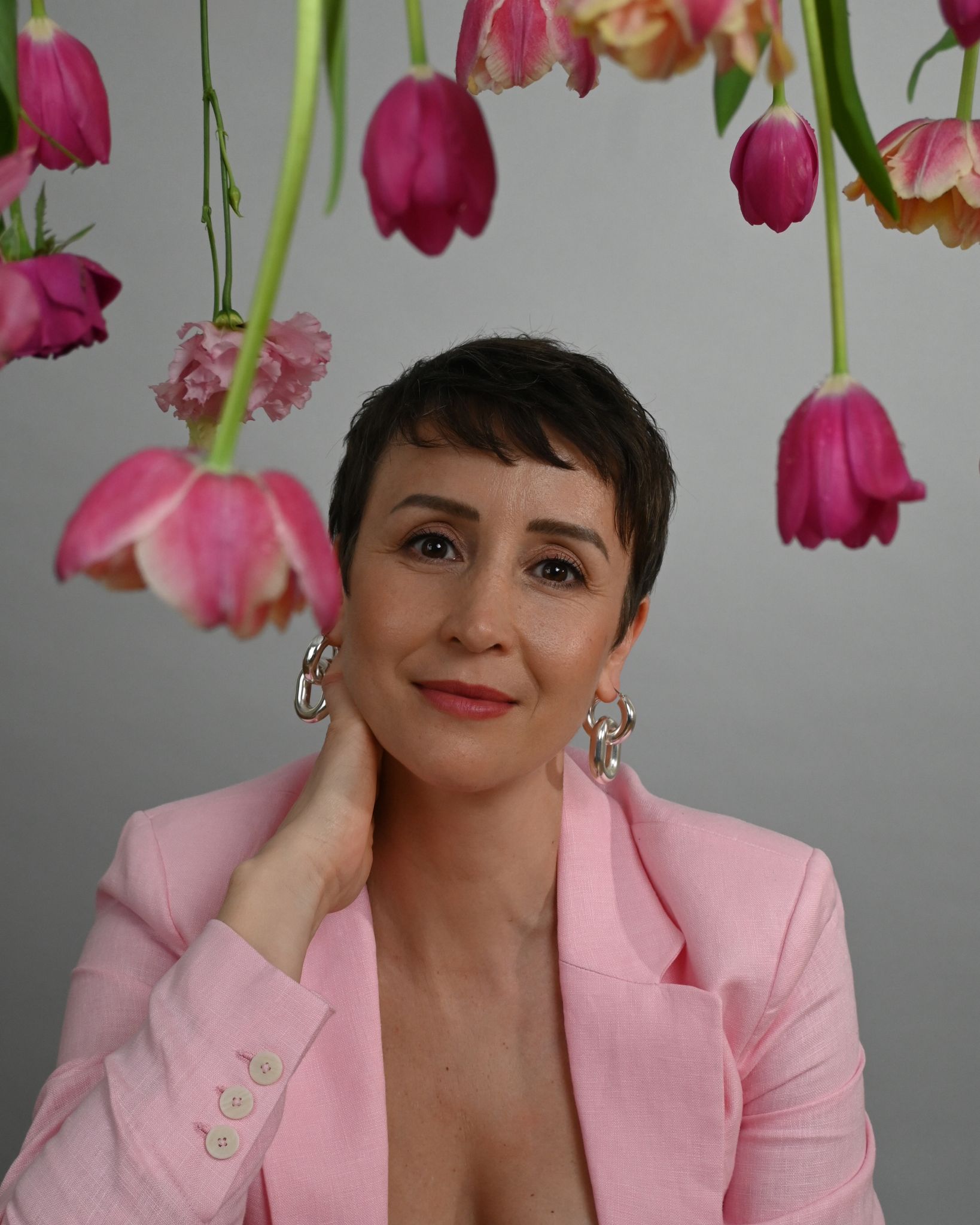
The Woman Changing the Way We Parent
An interview with Dr Shefali
I’d been looking forward to this conversation for months.
Ever since reading The Parenting Map, I’d found myself questioning not just the way I parent, but the emotional habits I’d carried with me into motherhood without ever really noticing. Like so many parents, I picked up the book hoping it would help me understand my child a little better. What I hadn’t expected was that it would help me understand myself.
It turns out that’s a fairly common response to Dr Shefali’s work.
The New York Times bestselling author, clinical psychologist and pioneer of the conscious parenting movement has spent years encouraging parents to look beyond behaviour and ask a much deeper question. Rather than focusing on what’s happening with our children, she believes we should first become curious about what’s happening within ourselves.
It’s a philosophy that has earned her millions of followers around the world and the admiration of Oprah Winfrey, who has described her as one of the most transformative voices in parenting today. Yet when we begin talking, there is nothing intimidating about her. She is warm, thoughtful and completely unapologetic about challenging ideas many of us have accepted for years.
“Our children don’t trigger us,” she says early in our conversation. “They reveal us.”
It’s a bold statement and, if I’m honest, not an easy one to hear.
After all, most parents can think of countless moments when a child’s behaviour has pushed them to the edge. The supermarket tantrum. The refusal to get dressed. The homework that still hasn’t been started despite three reminders. Surely those situations are enough to make anyone lose their patience?
Dr Shefali smiles.
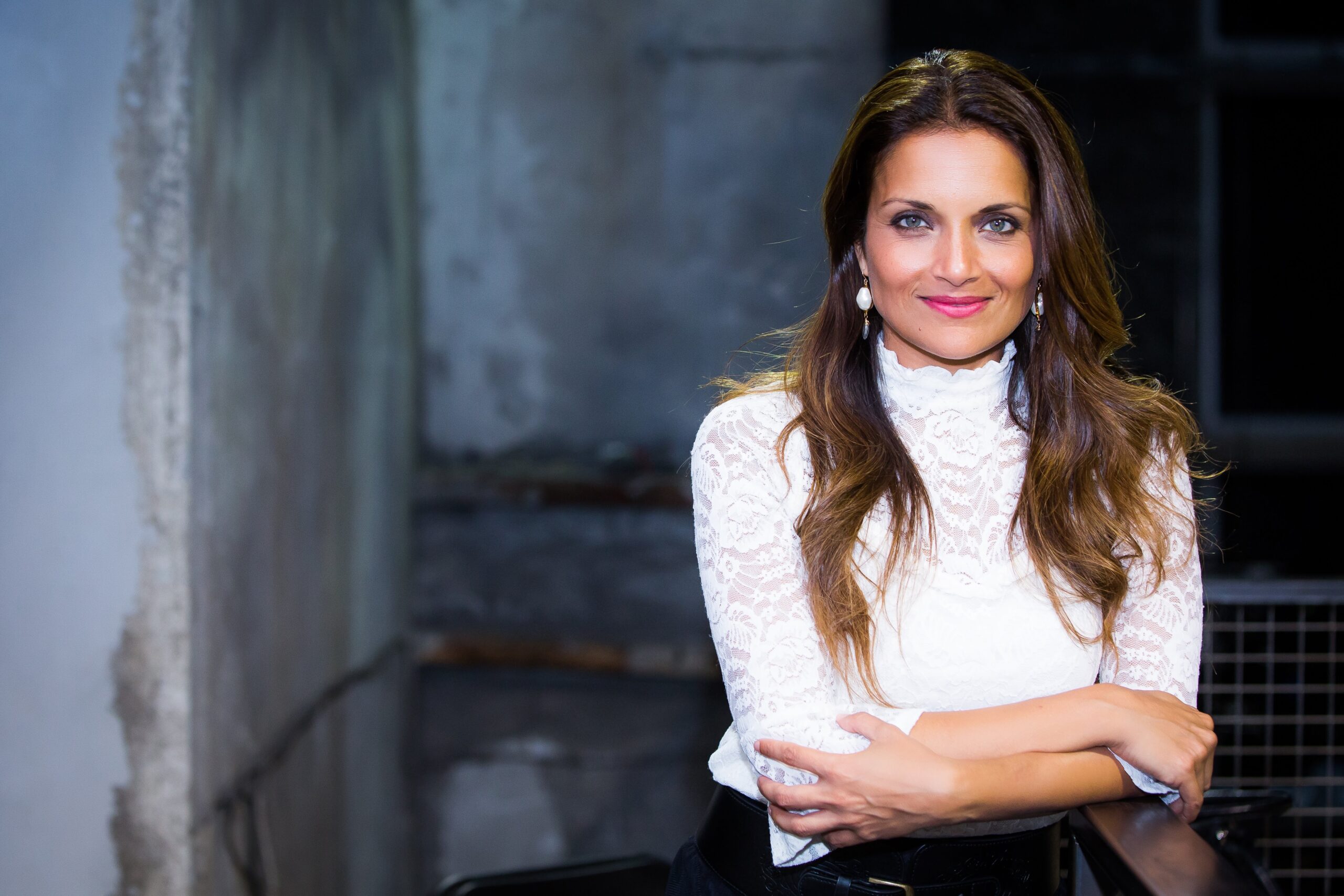
“We think that if we have a big reaction, it’s because of the trigger on the outside,” she says. “But the trigger is already inside us. The present is simply reactivating something from the past.”
It’s the idea that sits at the heart of conscious parenting and one that changes the direction of our conversation. Instead of discussing how to stop children arguing, refusing, shouting or pushing boundaries, we find ourselves talking about the stories adults carry into parenthood; the beliefs we inherited as children, the fears we never quite dealt with and the emotional patterns that can shape family life without us even realising they’re there.
When I tell her that reading The Parenting Map made me recognise emotions I’d unknowingly projected onto my own son, she nods immediately.
“Most of us justify our reactions,” she says. “We tell ourselves they’re normal because of what’s happening in front of us. But if we’re willing to pause for a moment, we begin to see that our reactions often have a much longer history.”
It’s an uncomfortable thought, but also an incredibly hopeful one. Because if those patterns have been learned, Dr Shefali believes they can also be unlearned. And perhaps that is why her work resonates with so many parents. She isn’t asking us to become perfect. She’s simply inviting us to become more conscious.
One of the reasons Dr Shefali’s work resonates with so many parents is that she never asks us to ignore the difficult moments. She knows children can be frustrating, exhausting and wonderfully unpredictable. What interests her is not so much the behaviour itself, but why two parents can experience exactly the same situation and respond in completely different ways.
“Our reactions are our patterns,” she says simply.
Those patterns, she explains, often begin long before we become parents. The child who learned that love depended on keeping everyone happy may grow into an adult who instinctively puts everyone else’s needs before their own. Another might have learned that the only way to be heard was to shout. Someone else may have survived by disappearing into the background whenever conflict arose.
Without realising it, we take those strategies into adulthood and, eventually, into parenthood.
It’s a thought-provoking idea because most of us assume we’re reacting to what’s happening in front of us. Dr Shefali believes we’re often reacting to something much older.
To help explain what she means, she describes five common emotional patterns that appear again and again in the families she works with. Some parents become fighters, immediately moving into confrontation. Others freeze completely, unable to process what they’re feeling before withdrawing from the situation. Some flee, emotionally checking out because everything has become too overwhelming.
Then she smiles.
“And then there are the fixers.”
I laugh before I can stop myself.
“That’s me.”
She laughs too.
The fixer, she explains, isn’t simply someone who likes solving problems. More often, they’re driven by anxiety. They rush to smooth things over, apologise, overcompensate and make everything right because sitting with someone else’s discomfort feels almost unbearable.
“It’s a panic,” she says. “You’re trying to get rid of your own anxiety.”
It’s one of those observations that lands with uncomfortable accuracy. I realise I’m not just thinking about parenting anymore. I’m thinking about friendships, relationships, work and every situation where I’ve instinctively stepped in to make life easier for someone else.
Dr Shefali isn’t interested in labelling people or putting them neatly into categories. The patterns are simply a starting point; a way of recognising ourselves with compassion rather than criticism. The moment we become aware of them, she believes, we have the opportunity to respond differently.
That opportunity begins with something surprisingly ordinary.
A pause.
“We first become intellectually aware,” she explains. “Then we practise.”
The first time, perhaps we only catch ourselves after we’ve reacted. The next time, we might notice halfway through. Eventually, if we keep practising, we begin to recognise the familiar feeling before it takes over completely.
It sounds wonderfully simple.
It is also incredibly difficult.
“Can I just be quiet before I fight, before I freeze, before I fix?” she asks. “Can I have a pause?”
She describes that pause as one of the most uncomfortable places we can find ourselves because it asks us to let go of the behaviour that has protected us for years.
“If fixing is your addiction,” she says, “who are you without fixing?”
It’s a question she returns to several times during our conversation, and for good reason. Beneath every emotional pattern lies something much deeper than parenting. There is a search for worth, identity and belonging that often began in childhood and quietly followed us into adult life.
Perhaps that is why so many people tell Dr Shefali they came to her books hoping to become better parents and ended up understanding themselves instead. The children may open the door, but the journey she invites us to take is ultimately an inward one.
As our conversation moves from the emotional patterns we carry into parenthood to the realities of raising children today, it becomes obvious that conscious parenting isn’t simply about looking backwards. It’s also about understanding the world our children are growing up in, and that world, Dr Shefali believes, is changing at a pace many parents are struggling to keep up with.
One of the biggest challenges, she says, is technology.
Like many parents, I confess that this is an area where I constantly question myself. My son is only eight, yet I already feel as though I’m competing with screens designed to hold his attention far more effectively than I ever can. He’s only allowed limited time on his tablet, but even then I notice how quickly he becomes bored with everything else. It feels as though childhood itself has changed.
Dr Shefali doesn’t hesitate.
“This is no longer about television,” she says. “We’re talking about sophisticated algorithms that are manipulating children to stay on the screen longer.”
It’s a distinction she feels passionately about because, unlike previous generations, today’s children aren’t simply consuming entertainment. They’re interacting with technology specifically designed to keep them scrolling, tapping and returning for more.
“They’re getting dopamine hits,” she explains. “You’re teaching them to become dopamine junkies.”
Her language is deliberately direct.
“Would you give your child crack cocaine?” she asks. “No. Then why would you hand them something that has the same effect on the brain?”
It’s a comparison that leaves little room for ambiguity.
Dr Shefali believes many parents already know, instinctively, that something isn’t right, but they’re often afraid to hold firm because they don’t want to be seen as too strict or because they’re exhausted by the constant negotiation that has become part of modern family life.
Instead, she believes children are crying out for something different.
Boundaries.
Not as punishment, but as protection.
“Parents need to feel empowered to create those boundaries,” she says. “It doesn’t matter if your child protests. Your job is to protect them.”
It’s one of the strongest messages to emerge from our conversation because it reframes boundaries entirely. Rather than seeing them as something that damages the parent-child relationship, Dr Shefali argues that clear, loving limits are one of the greatest expressions of love we can offer.
As she talks, I find myself thinking about childhood before smartphones, when boredom was simply part of growing up. We read books because there was nothing else to do. We played outside because eventually curiosity won. We invented games, built dens and somehow managed entire afternoons with very little adult involvement. Boredom wasn’t a problem to solve; it was often the beginning of imagination.
Dr Shefali agrees that something important is being lost.
When every quiet moment is immediately filled by a screen, children lose the opportunity to develop patience, creativity and emotional resilience. Those moments of stillness, frustrating as they may seem, are often where confidence begins to grow.
It’s another example of the way her work gently challenges modern assumptions. So much of today’s parenting advice focuses on keeping children constantly stimulated, entertained or occupied. Dr Shefali offers a different perspective. Perhaps our children don’t need more activities, more distractions or more technology. Perhaps what they need most is the confidence to experience life more slowly, with parents who are willing to tolerate a little discomfort in the short term because they understand the long-term reward.
There is, of course, no suggestion that this is easy. If anything, Dr Shefali is refreshingly honest about how difficult conscious parenting can be. It asks us to resist not only our children’s protests but often our own fears as well. Every time we hold a boundary, every time we resist the urge to rescue or immediately fix, we’re practising something new ourselves.
In many ways, she suggests, parenting becomes a mirror. The more willing we are to look into it, the more clearly we begin to understand not only our children, but ourselves.
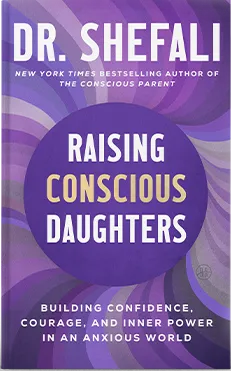
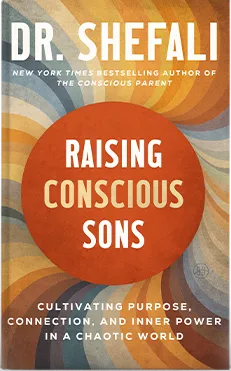
By the time we begin talking about Dr Shefali’s latest books, Raising Conscious Sons and Raising Conscious Daughters, it becomes clear that they are a natural continuation of everything she has been teaching for years. Conscious parenting has never been about creating perfectly behaved children; it has always been about understanding who they are, what they are experiencing and how we, as parents, can meet them with greater awareness.
What has changed, she believes, is the world our children are now growing up in.
Previous generations certainly faced challenges, but today’s children are navigating an entirely different landscape. Social media, pornography, body image, anxiety, identity, online bullying and the relentless pressure of comparison have all become part of childhood in ways that would have been unimaginable only a generation ago. Boys and girls are also experiencing those pressures differently, which is why Dr Shefali felt they deserved books of their own.
“Girls are going through a crisis of selfhood,” she explains. “They’re asking, ‘Who am I?’ Boys are going through a crisis of masculinity. They’re asking, ‘What does it mean to be a man in this world?'”
Those are huge questions, and Dr Shefali believes they deserve thoughtful, honest conversations rather than simplistic answers. Drawing on neuroscience, psychology and decades of clinical experience, the books explore everything from attention and attachment to eating disorders, body dysmorphia, sexuality, self-harm and emotional regulation. Yet throughout our conversation, she keeps returning to the same point. None of these challenges can be met by fear alone. Parents need confidence as much as children do.
That word – confidence – feels like the perfect place to end our conversation.
So much of modern parenting revolves around achievement. We celebrate grades, trophies, exam results and milestones, often hoping that confidence will somehow grow alongside them. Dr Shefali sees it rather differently.
Children, she believes, develop confidence through connection.
“They need to know,” she says, “that all of them are accepted by their parents.”
Not the version that behaves perfectly.
Not the version that succeeds.
Not the version that makes us look like good parents.
The whole child.
Their curiosity, their fears, their mistakes, their awkwardness, their emotions and their individuality.
When children feel that kind of unconditional acceptance, she believes they become far less dependent on seeking validation everywhere else. They begin to trust themselves because, from their earliest years, they have experienced what it feels like to be truly seen.
It is a beautifully hopeful way of looking at parenting because it removes the pressure to have all the answers. None of us will get it right every day. We will all lose our patience. We will all say things we wish we hadn’t and make decisions we later question. Conscious parenting isn’t about eliminating those moments. It is about recognising them, repairing them and remembering that our willingness to grow may be one of the greatest gifts we ever give our children.
As our conversation comes to an end, I find myself thinking back to where it began. I had expected to spend an hour talking about children. Instead, we had spent much of it talking about adults; about healing, awareness, identity and the emotional stories we carry through life without even realising it.
Perhaps that’s why Dr Shefali’s work has touched so many people around the world.
She doesn’t simply teach us how to become better parents.
She reminds us that every child deserves a parent who is still willing to grow.
And perhaps that is the most hopeful message of all. Because while none of us can rewrite our own childhood, every one of us has the opportunity to write a different story for the next generation.
Join us: Confidence Conversation with Dr Shefali
Some conversations are better had in the room.
If this interview stirred something in you, we’re inviting you to sit with Dr Shefali herself. Confidence Magazine is hosting an intimate lunch where you can ask her the questions this piece raised for you, hear her speak in person and leave with a signed copy of Raising Conscious Sons or Raising Conscious Daughters.
This isn’t a lecture. It’s a chance to be in the same room as a woman who has spent her career teaching us that the real work always starts within.
📍Brighton | 📅 16th October | 🎟️ https://events.theconfidencemagazine.com/
Spaces are limited.