

Key Takeaways
- Spirituality is not about religion or elaborate rituals. True spirituality is available through the little mundane moments of being there and being willing.
- Take it slow and step-by-step. Doing a few minutes of meditation and/or journalling and/or gratitude daily will create a stronger base than long sessions taken occasionally.
- Nature is easily available as a spiritual anchor. Being outside the lab can be a source of grounding and perspective, and doesn’t require any specific expertise or equipment.
- Self-judgement hinders our spiritual development. It is far better to be gentle on lapses or distractions than critical, and this makes for a more sustainable practice.
- Each person has their own rituals that bring a meaningful rhythm to life. A series of actions can be repeated throughout the day to provide grounding transitions.
Intro
As soon as I was interested in spirituality, I felt like I was being bitched around and didn’t know what all the traditions, terminology, and rules were. I discovered that over time spiritual practice could be simpler, and didn’t necessarily have to come with a religion attached. In this article, I’d like to show you the non-intimidating, easy-to-implement practices that got me started and ones I still use today.
What Spiritual Practice Actually Means
I believe before diving into any particular techniques, it might be good to explain what I mean by “spiritual practice” since the word is used so widely it can be difficult to understand. Spirituality does not have to be religious, but it may involve a religious practice for those who are a part of that religion. I really think now that spirituality is a sense of connection: to oneself; to others; to something bigger than the list of things to do—whether it be the natural world, energy, consciousness, or a higher power.
So, spiritual practice becomes the purposeful effort we engage in to tend to that connectivity. You need no temple to pray here, no belief system, no long years studying. The best spiritual moments I’ve had have been just simple things like watching the sunset, just sitting and thinking, being really grateful for something simple, and doing everyday things really special. It is the HOW with which we approach these moments and our focus upon them that is important.
Starting With Stillness and Silence
At first, when I was beginning to learn about spiritual practice, I thought I would need to be taught difficult meditation exercises, or I would have to memorise prayers. What helped me most at the start of all this was simply trying not to distract myself right away and giving myself time for stillness and silence.
I began with 2 or 3 minutes and sat quietly, with no myPhone or musicians playing, and with no intention other than just sitting. This was an uncomfortable feeling initially. I couldn’t stop thinking about what I should be doing, about random ideas, and continually reaching for my phone or checking the time. Little by little, however, sitting quietly became more familiar, and I began to observe slight changes: a tranquillity, a clarity, or just more of a feeling of being in myself.
Simple Meditation Techniques for Getting Started
Probably the most ubiquitous practice when one looks at spirituality is meditation, and I should state right off the bat that there is absolutely no special equipment, app, or in-depth training required to get started. I began at the fundamental level of form possible, and it’s still central to what I do now.
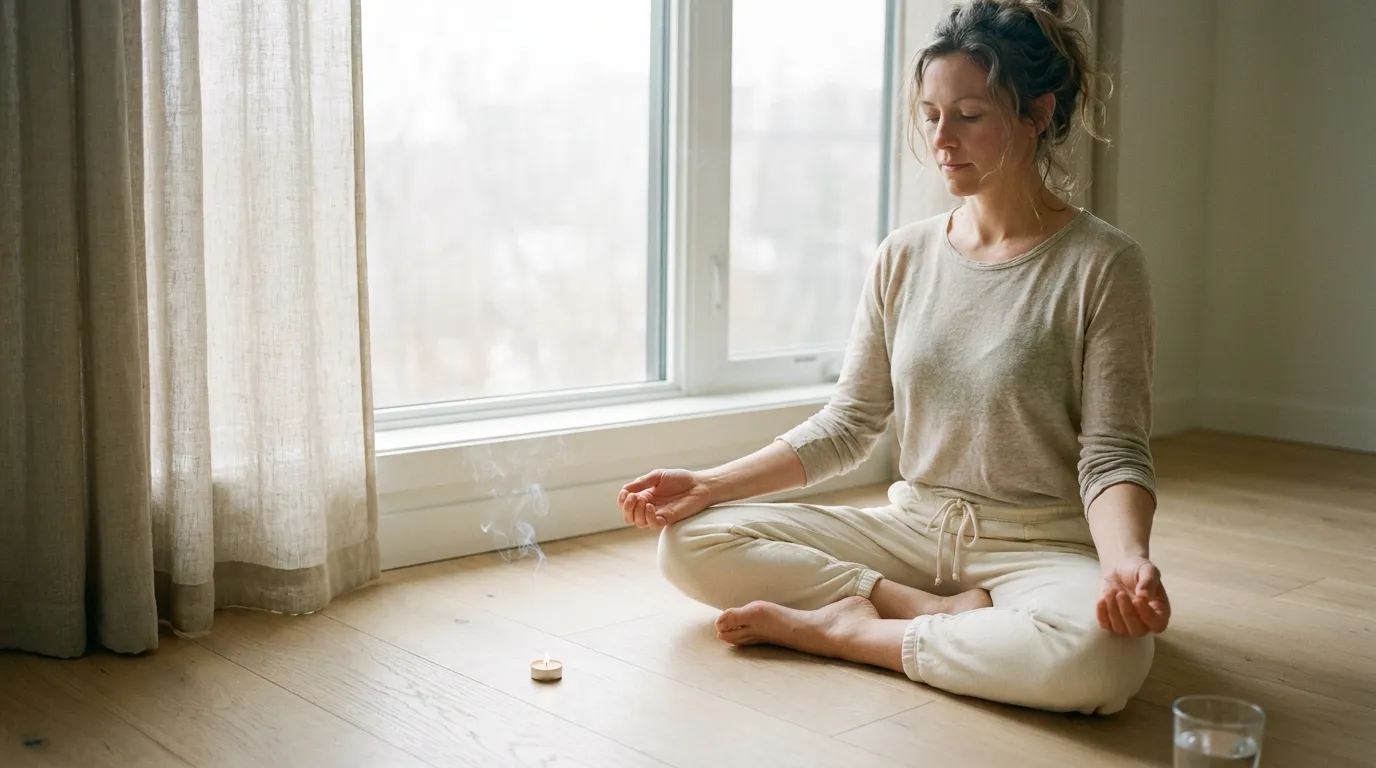
I first started with breath meditation. I just sat there in comfort, closed my eyes, and concentrated on the natural rhythm of my breath, paying no attention to any efforts to change or control my breath. When my mind would start getting lost—usually all the time in the beginning- I would notice and quietly call it back to my breath without criticising myself for losing it. I can’t overestimate the benefit this non-judgemental redirection brought to me in my meditation and my life.
Beginner-Friendly Meditation Approaches to Try
For those who are just beginning to learn meditation, here are some easy ways to try out meditating:
- Five-minute breath awareness. Sit comfortably and observe the breath; allow it to be as it is, and refocus whenever the mind is distracted.
- Guided body scan. Take it easy and gradually increase the mindful awareness of each body part while letting go of the tension.
- Walking meditation. Do not concentrate on thoughts but on the sensation of walking, the rhythm of your feet and legs, and the rhythm of your breathing.
- Loving-kindness meditation. Recite phrases of goodwill to yourself and others, silently; for example, may you be happy, may you be at peace.
- Candle gazing. In a darkened room, sit and gently watch the flame of a candle and direct your mind around that one flame.
After experimenting a bit in the beginning, I realised what styles really worked for me instead of what I felt was just not in the cards.
Journalling as a Spiritual Practice
At first I did not consider journalling to be spiritual; however, as time went on, it became one of the most continual practices I came back to. Writing gives me otherwise unavailable time to think, a time that is sacred to me.
I began writing something, any time, that had been rattling around in my head for five or ten minutes each morning without regard to whether it made any sense, or how to write it correctly. In this “stream of consciousness” or “morning pages” approach, I washed away anything that wasn’t straight, and sometimes this approach uncovered thoughts or feelings that I hadn’t been conscious of.
Through my writing over the years, I developed “trends” which helped me to identify some of the deeper things I could learn about myself, weaknesses and fears that I would get in my own way, things that I found joyful yet unexpected, values that I never had a chance to put into words before.
Connecting With Nature
Rustic spending is one of the easiest, consistent, and least controversial means of groundless, artful living in my life. I don’t have to have any special equipment, special training, or special belief system; nor do I need to be some kind of expert or go outside and numb myself to pay attention.
It was simple at first, and I began with small trips of roughly 15 minutes, ten minutes outside without a mobile phone.
When I go out on these walks, I attempt to really pay attention to what’s around me: the bark on a tree, the birds and the sounds, the sunlight falling through the leaves. Spending time in this way in nature can help foster a feeling of connection and perspective that may be difficult when people are inside in their rooms, surrounded by screens and daily activities.
Practising Gratitude and Presence in Daily Life
However, aside from journalling, I have discovered that I do have a practice – it’s just one of the little moments in my day where I focus and am thankful for something. This has proven particularly useful in the busy time of the year when participation in extended practices seems impractical.
We began to do this as a sort of prayer, regularly stopping to pray before our meal is served. Still, more than that, now I have begun to pause before eating, to really take a moment to apprise the food that I’m eating and the work that has gone into it that made it possible to eat. This little break brought eating from automatic to conscious – even if only by a few seconds.
I also do what I call “micro-gratitude”, where I try to be grateful for little things as they occur, not just at the end of the day. I’ve been practising for a long time to notice more of these small things in real time; due to that, I now have a good cup of coffee, a kind word from a stranger, or a moment of unexpected calm: these are the things that have trained my mind to notice more as time goes on.
Everyday Moments to Practise Presence and Gratitude
Use this to identify some of the times in a normal day that I attempt to incorporate small moments of spiritual awareness:
- When you get your first cup of coffee or tea, take a moment to breathe in, recognise the moment, and don’t immediately move to your phone or to your to-do list.
- On a drive or a walk, try to pay attention to 3 things: sounds, actions, or colours, rather than being triggered by distraction.
- At the beginning of a meal, pause a moment and truly admire the food and the journey that it has travelled to become what it is.
- If anything good happens to you (no matter how trivial), stop and take a moment to notice it, instead of just dismissing it.
- Each night, reflect on something that happened that day that you are thankful for to be the last thing you think before going to sleep.
All of these moments involve minimal adjustment in time – simply a change of focus when you already have something scheduled.
Exploring Rituals That Feel Meaningful to You
Ritual also came to mind for me in spiritual practice, which I originally thought was specifically associated with organised religion, but now know it to be much more.
One of the definitions of ritual – in this context – is a repeated action performed with intention and awareness, and in creating my own personal rituals, I’ve breathed additional rhythm into my life.
It began simply enough: The first candle I light every morning is when I get to work, not for a religious reason, but one of intentionality.
The little act lets my mind know that I am about to do something with intention, instead of rushing into things on a reactive basis. This little ritual instead became a touchstone in my life, which I am happy to carry with me over time.
Having a simple little evening wind-down routine has also been helpful. The screens are switched off a certain amount of time before going to bed, lighting is dimmed, and there are a few minutes of quiet reflection/exploration of light stretching, which tells my body and mind to begin the process of coming to bed and shutting down.
Building Community and Connection
There is a lot of personal practice that one can delight in, but I have found that there has been an added level to spiritual practice by being around other people enjoying the same activities as me. This does not necessarily involve becoming a member of a formal religious community – though for some it certainly does!
Begin with a small group, perhaps a topic group at the local community centre, or a web-based forum about mindfulness and spiritual development. Especially casual interactions with other people have provided me with comfort in my early days of teaching and ways of thinking that I had never thought of myself.
Talking with friends and family, who I can trust, has further enhanced my practice in relation to spirituality. It doesn’t have to be a lengthy formal discussion; it could be saying that I just read this and that and then following the thread of the speech. I’ve noticed that many people have similar questions about this topic, but don’t ask until a question is asked, or so be it.
Common Challenges Beginners Face
I do think it’s fair to admit that it doesn’t always go well, and it doesn’t always pay off when you begin a spiritual practice, but I did have a couple of hang-ups that made me want to give up before I got going.
Probably the one thing I struggled with the most was consistency. When life gets hectic, which tends to happen a lot, it is all too easy to forget about spiritual practices. I eventually got around to that by just keeping my practices small, a couple of minutes, not an hour, so it was much more attainable even during the busy weeks.
Summary
You don’t need to learn anything, go on any retreat, or follow a certain faith to start a spiritual practice. It has been the little things for me: moments of quiet, breathing mindfully, feeling grateful, spending time outside, and doing little things that give meaning and purpose to everyday life.
These practices have felt like giving me a profound sense of connection, closer to myself than I believed when I began, and closer to the world around me too.