

Key Takeaways
- Make time to create something small that may not seem needed at the time. Starting with 1 or 2 minutes takes the resistance off of going for a longer period and helps you develop consistency much more effectively than longer time commitments.
- Plank onto something you already do! By combining practice with an automatic task, such as brushing your teeth, you don’t have to depend on remembering or motivation.
- The errant mind is an aspect of the practice, NOT a failure. The true art of meditation is noticing and refocusing.
- Focus on consistency, not performance. By concentrating on showing up, you will avoid self-judgement and pressure about how “successful” the session was.
- Flexibility depends on how long the habit can last. Adapt the length and type of sessions to fit each individual’s present life situation to avoid all-or-nothing scenarios and exercise abandonment.
Introduction
I have tried meditating several times and stopped each time with a good decision, which only lasted for 1-2 weeks. It wasn’t a glitzy app or any kind of hard-core system – just a few little tweaks to my attitude towards doing the habit. I want you to know, in this article, what the key was in making my meditation practice really stick.
Why Most Meditation Habits Fail
I wanted to focus on what works first, but I believe it’s important to understand the why behind so many of us not having a meditation habit. Understanding these trends greatly helped me avoid the same pitfalls.
One of the more serious problems I had early on was having unrealistic expectations. I would say I’m going to do 20 or 30 minutes a day from the very start, and if it takes longer, it must be less effective. After a week or two at worst, it was a chore, and I wouldn’t show up anymore. We set ourselves up for failure when we set goals that are too ambitious; habits are made one at a time in small, takeable steps.
Another pitfall is the conception that meditation is something one succeeds with or fails at completely. When my mind rambled, I used to get frustrated and think I was not good at meditating, but this is not true. In actuality, the wandering of the mind is a normal phenomenon and should not be taken as a measure of failure. This lack of understanding led me to quit many times, until I finally realised that’s just how it is.
The lack of a specific cue and time made meditation a rather conscious, intentional exercise on almost a daily basis. Decisions are easier to avoid than automatic processes.
Starting Absurdly Small
The most important thing that helped me sustain my meditation habit was having a completely different perspective on what “good” meditation should look like. So rather than engage in twenty minutes a day, I set a daily goal of two minutes—so low it seemed ludicrous not to do.
This way gets rid of the greatest obstacle to consistency: resistance. Two minutes doesn’t mean you have to rearrange your schedule or be in a quiet, uninterrupted block of time. It can be incorporated into just about any day regardless of the chaos.
Getting started small helped me go faster. After I established a habit of sitting down regularly (even for just two minutes), it was natural to extend the amount of time sitting. In a couple of months, my two-minute sessions were filling in with 10- and 15-minute sessions!
I would definitely suggest that people don’t go full bear. Sounds crazy, particularly if you’re pushing for results right from the start, but not only does the habit make for a much stronger foundation, but it’s much harder to burn out.
Linking Meditation With an Ingrained Activity
Including some sort of association of a habit to something I already do well helped a lot. Just leaving it to memory or motivation alone was too hit-or-miss for me.
I decided I would meditate as soon as I finished brushing my teeth in the morning, as this was already something I regularly did. Brushing my teeth automatically triggered the next step in meditation.
When deciding on anchor habits, there’s quite a bit at stake. I first attempted to do meditation when I would have my morning cup of coffee, but my mornings were inconsistent. The relationship was reinforced by a stable but challenging anchor habit – occurring at the same time, place, and during the same routine, each day.
This approach is successful because it removes the requirement to use your will or motivation to start the exercise.
The Timing of Daily Activities
If anything surprised me with establishing a meditation practice, it was the importance of timing.
It was best for me personally to engage in meditation immediately upon waking up in the morning. Before I was overwhelmed with the responsibilities of the day, and before other things clamoured for my attention. Meditating before I start checking my phone or email puts me in an unwired state of mind.
However, it is not necessarily a fit for everyone. Evening meditation can be preferable for some to release the day’s stresses before going to sleep. Others like to meditate in the middle of the day.
The most important thing is to pick a time that you can consistently keep and repeat each day.
Guidelines for Choosing the Perfect Time to Meditate
- Be aware when your schedule is most predictable. Pick a time of day that is free of impromptu requirements.
- Listen to your own rhythms and patterns of energy. Some will do better in the morning; others will reflect better at night.
- Wait one week or more before making a time change before trying an experiment. Let it be long enough to make sure “one shot” or “two shots” of it aren’t to blame.
- Think about problems you want meditation to improve. Try a morning session to focus and calm the body, and an evening session to let go of built-up stress.
- Select a time when you are least likely to be disturbed by other people, such as before anyone gets up or after everyone goes to sleep.
Get Rid of the Friction in Your Practice
Little things like having to locate a cushion or find the appropriate app added a bit of friction that made it easier to skip meditation. Minimising this friction became important towards building lasting consistency.
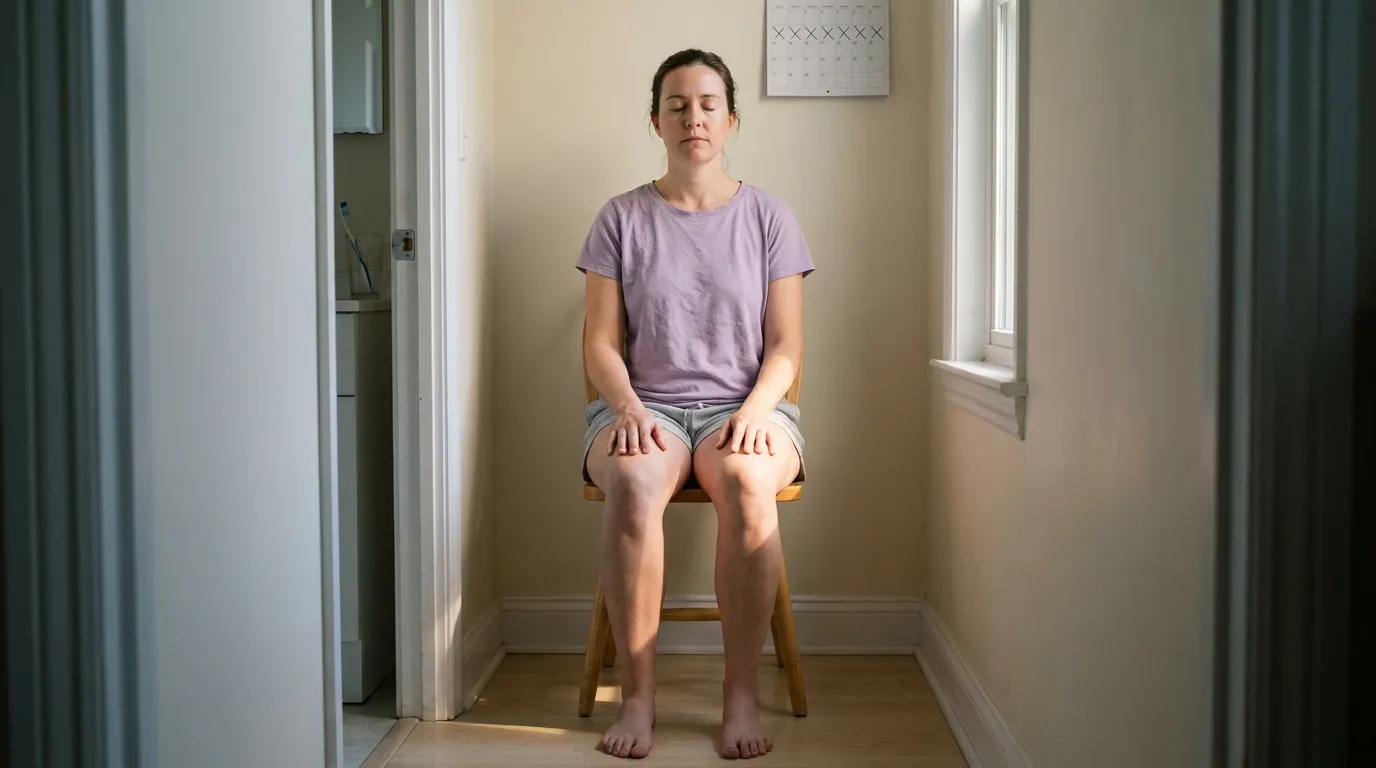
I created a place in my house where I can go to meditate at any time, with no set-up. A chair was designated with a cushion already in place, allowing me to get seated and start without taking several minutes.
I also took a down-and-dirty attitude towards guided meditations. Rather than searching for the “perfect” meditation every day, I picked a few everyday meditations that I used a few times a week. Pre-selected options reduced decision fatigue.
I found turning my phone to flight mode or placing it in another room reduced another source of friction and distraction.
Monitor Progress Without Feeling Pressured
Using some method of measurement has been a good way to hold myself accountable, but the right kind of measurement can push me towards meditation, while the wrong measurement is a recipe for stress.
I began keeping a very simple habit tracker – a basic calendar with an X if I took time for meditation, in any way possible, no matter for how long. I did not want to “break the chain” of consecutive days, which gave a gentle accountability.
By design, I didn’t monitor things such as how long a session was, how “successful” the session was in my mind, or how calm I ended up feeling. I focused on consistency: do I sit down and practise?
If I missed a day, I made an effort not to make it feel like a failure. Rather, I went back to meditate the following day. Gently, non-punitive monitoring played a key role in keeping me consistent.
How to Handle a Wandering Mind Without Frustration
One of the great assumptions I made at the beginning was that a “successful” meditation was one in which nothing played in my mind.
I came to understand that it’s not a problem with mind budgies; it’s just what minds do. This is the actual practice of meditation: repeatedly noticing the wander and gently nudging your mind back to the breath or focus. You are not failing at meditation every time you wander and redirect; you are practising it.
I didn’t see a busy mind as discouraging, rather as a chance to practise the main skill meditation is meant to help develop – awareness and slight redirection.
Common FrFrustrations for Beginners and How to Deal With Them
- “My mind won’t stop racing.” This is quite normal; gently recall your focus without judgement.
- “I feel no tranquillity afterwards.” The positive effects of sessions are not always apparent after one single session.
- “I doze off while I meditate.” Sit up instead of on your bed or try to meditate earlier in the day when you are less tired.
- “I can’t spare the time.” Keep sessions short; even a minute counts. It will keep you in the habit.
- “I’m just too lazy to do it.” Tie your routine into something that you already do every day to make it a habit.
Adjustments for Living with Change
Things change, and sometimes when we’re busy or feeling different, we totally stop!
At the very least, during challenging times, travel, or illness, I haven’t had an “all-or-nothing” attitude. A one-minute session is enough during an overwhelming week. Maintaining that level of consistency has made it a lot easier to get back into the habit.
I have also changed my meditation conditions. In times when I have encountered significant nervousness, I have relied more on nervous system downers, like breathing exercises. At other times, I’ve had longer, more exploratory sessions.
Summary
More than I can imagine, the reason some people stick with a meditation habit can be attributed to a lack of willpower and technique. The key was making it so easy to practise and stopping the pressure to meditate “perfectly”. These changes made meditation a solid and lasting component of my life.