

Key Takeaways
- A capsule wardrobe is the foundation of packing light. Choosing 2–3 coordinating colours lets a small number of pieces create dozens of different outfit combinations.
- Plan for mid-trip laundry instead of packing for every day. One load of laundry can cut your clothing needs roughly in half across a two-week trip.
- Use packing cubes and rolling techniques to maximise space. These simple, low-cost strategies can significantly increase how much fits into a single bag.
- Layering beats packing separate outfits for different climates. A base layer, mid-layer, and packable outer layer adapt to changing weather without adding extra bulk.
- Travel-sized and digital alternatives save significant space and weight. Refillable toiletry bottles, solid products, and e-books reduce both bulk and overall bag weight.
Intro
Packing for two weeks doesn’t have to mean dragging a giant suitcase through airports and cobblestone streets.
With the right strategy, you can fit everything you need into a single cabin bag or one manageable holdall, saving money on baggage fees and making travel days far less stressful. Here’s a complete guide to packing light for a two-week trip, no matter your destination.
Why Packing Light Matters
The Benefits of Travelling with Less
Packing light isn’t just about convenience—it changes the entire travel experience from start to finish.
- Saves money on hold luggage fees, which can range from $30 to $75 each way and add up quickly on return or multi-leg flights.
- Reduces stress, since there’s no risk of lost hold luggage, delayed bags, or waiting anxiously at baggage reclaim.
- Increases mobility, making it far easier to navigate stairs, cobblestone streets, train platforms, or crowded public transport.
- Speeds up travel days, allowing you to skip check-in counters and long bag-drop lines and head straight to security.
- Forces better planning, which often results in a more intentional, less cluttered trip with fewer unnecessary purchases.
- Protects your body, since lighter bags reduce strain on your back, shoulders, and joints during long walking days.
Common Myths About Packing Light
- “I need a different outfit for every day.” In reality, a small rotation of five or six mix-and-match pieces can easily stretch across fourteen days.
- “I’ll need extra just in case.” Nearly every destination has chemists, convenience stores, or shops where you can buy anything you genuinely forgot.
- “Packing light only works for warm climates.” With the right layering strategy, packing light works just as well for cold-weather or multi-season trips.
- “A bigger suitcase means less stress.” In practice, a larger bag often invites overpacking, which creates more decision fatigue and physical strain, not less.
Choosing the Right Bag
Cabin Bag vs. Hold Luggage
Deciding on your bag size early shapes your entire packing strategy for the rest of the trip.
- A cabin-sized bag (typically around 45 linear inches, or roughly 22 x 14 x 9 inches) forces discipline and avoids checked bag fees entirely.
- A slightly larger checked bag offers more flexibility for colder climates or bulkier gear but should still be limited to one single bag for a two-week trip.
- A soft-sided holdall or travel backpack is often easier to manoeuvre on uneven terrain, stairs, or public transport than a rigid, wheeled suitcase.
- A hybrid wheeled backpack offers the best of both worlds—wheels for smooth airport floors and backpack straps for cobblestones or hiking trails.
Features to Look for in a Travel Bag
- Lightweight construction, since the bag’s own weight counts against airline hand luggage and hold baggage limits.
- Multiple compartments or a clamshell opening to keep items organised and easy to access without unpacking everything.
- Compression straps inside the bag to reduce bulk and maximise usable space.
- Durable, weather-resistant exterior material, especially important for trips involving varied climates or unpredictable weather.
- A lockable zip or built-in TSA-approved lock for added security in shared accommodation or transport hubs.
Matching Your Bag to Your Trip Type
- City and cultural trips: a wheeled cabin bag works well given mostly paved streets and hotel stays.
- Backpacking or multi-destination trips: a structured travel backpack is easier to carry over long distances or uneven terrain.
- Business or conference travel: a garment-friendly cabin bag with a dedicated suit or dress compartment helps prevent wrinkling.
- Beach or resort trips: a lightweight holdall is often sufficient, since packing needs are typically simpler and more casual.
Building a Capsule Wardrobe
Choose a Base Colour Palette
A capsule wardrobe built around two or three coordinating colours allows every single item to mix and match with several others, multiplying your outfit options without adding bulk.
- Stick to neutral tones like black, navy, grey, or beige as your foundational base.
- Add one or two accent colours, such as a bold scarf or patterned top, for variety without overcomplicating outfit combinations.
- Choose fabrics and textures that pair well together regardless of the specific piece, avoiding items that only work with one other item in your bag.
Prioritise Versatile Pieces
- Pack items that can be dressed up or down depending on the occasion, such as a simple dress that works for both sightseeing and a nicer dinner.
- Choose bottoms that pair with every top you’re bringing, rather than a pair of trousers that only matches one shirt.
- Include at least one layering piece, like a cardigan, light jumper, or packable jacket, that works across multiple outfits and climates.
- Select one or two pairs of shoes that work for both walking and slightly dressier occasions to avoid packing several specialised pairs.
Sample Two-Week Packing List
- 5–6 tops, mixing short and long sleeve depending on the destination’s climate
- 2–3 bottoms, such as trousers, shorts, or a skirt, depending on activities planned
- 1 dress or dressier outfit option, if the trip calls for a nicer evening out
- 1 lightweight jacket or versatile layering piece for cooler evenings
- 7 pairs of underwear and socks, or fewer with a plan to hand-wash midway through the trip
- 1–2 pairs of shoes, chosen specifically for comfort on long walking days and light versatility for evenings
- Sleepwear and a swimsuit, if relevant to the destination or accommodation
Adjusting the Capsule for Trip Type
- Warm-weather trips: prioritise breathable fabrics like linen or cotton blends, and include a sun hat and lightweight cover-up.
- Cold-weather trips: focus on thermal base layers and one strong insulating mid-layer rather than multiple bulky jumpers.
- Business trips: build the capsule around one or two blazers that pair with several bottoms and tops for a polished, repeatable look.
- Active or outdoor trips: prioritise moisture-wicking, quick-dry fabrics over cotton, which stays damp longer after sweat or rain.
Packing Strategies That Save Space
Roll, Don’t Fold
Rolling clothes instead of folding them typically saves significant space and helps minimise wrinkles during transit.
- Roll heavier items like jeans or jackets first to help protect more delicate fabrics packed around them.
- Roll lighter items, like t-shirts and light knits, more tightly to maximise overall space efficiency.
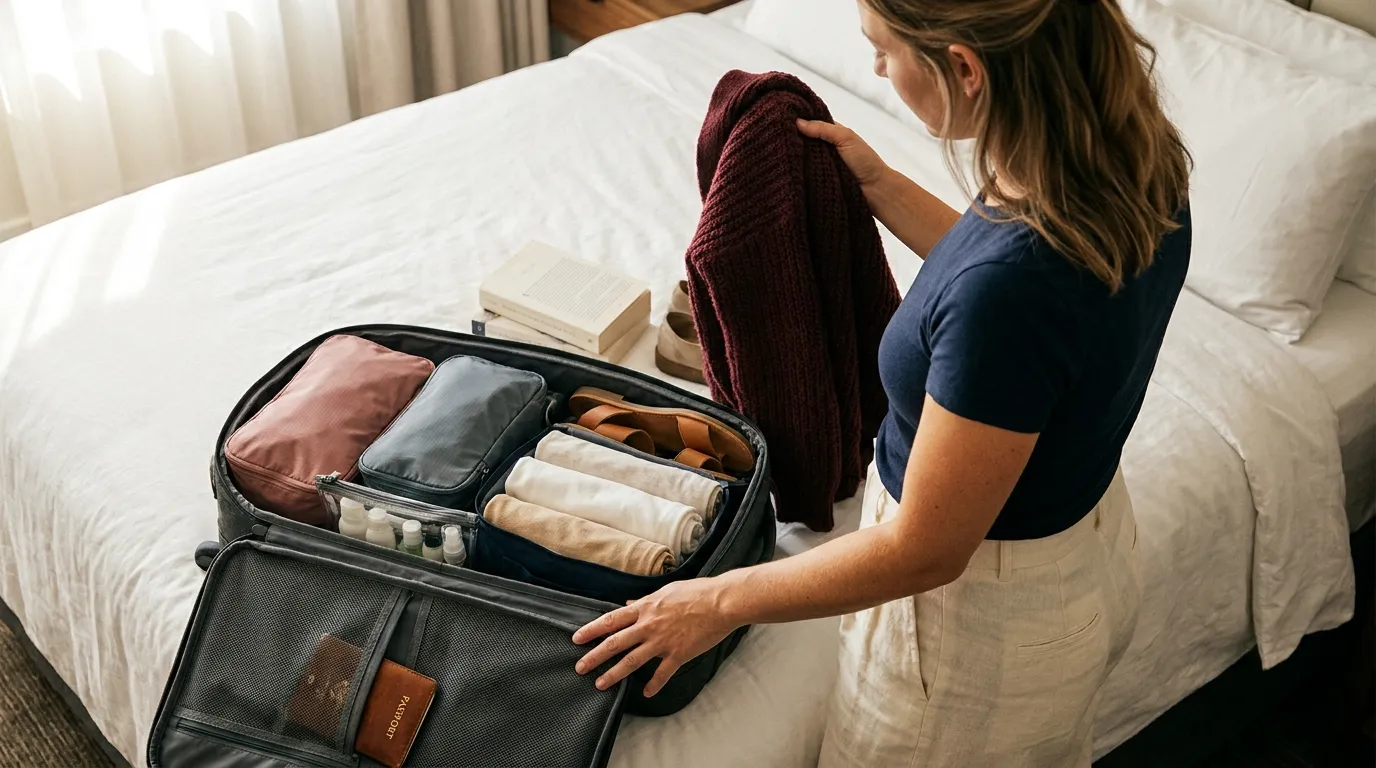
- Pack rolled items vertically, like files in a drawer, so you can see your entire wardrobe at a glance without digging.
Use Packing Cubes
Packing cubes keep your bag organised and make it far easier to compress clothing into a smaller footprint.
- Separate cubes by category, such as tops, bottoms, and undergarments, to speed up finding items later.
- Use compression cubes specifically for bulkier items like jumpers, jackets, or swimwear.
- Keep one small cube or bag reserved for dirty laundry to separate worn items from clean clothing as the trip progresses.
- Choose brightly coloured or clearly labelled cubes if travelling with a partner or family to avoid mixing up belongings.
Wear Your Bulkiest Items While Travelling
- Wear your heaviest shoes, thickest jacket, or bulkiest jumper on travel days instead of packing them inside your bag.
- This single habit frees up significant suitcase space that can be used for smaller, more packable items.
- Choose travel-day outfits that remain comfortable for long flights but are still versatile enough to be worn again later in the trip.
Packing Toiletries and Essentials
Stick to Travel-Sized Products
- Use refillable travel bottles for shampoo, conditioner, and lotion instead of packing full-sized containers from home.
- Choose solid alternatives, like shampoo bars, solid perfume, or bar soap, to save space and sidestep liquid restrictions entirely.
- Pack only the toiletries you’ll realistically use during the trip, rather than a full backup of every product sitting in your bathroom at home.
Plan for TSA and Airline Liquid Rules
- Keep liquids in containers of 100ml (3.4 ounces) or less if flying with a cabin-bag-only bag.
- Pack all liquids together in a single clear, litre-sized resealable bag for faster and easier security screening.
- Consider buying larger toiletries once you arrive at your destination if the trip is long enough to justify it, rather than packing full-sized bottles from home.
Essential Extras to Include
- A small first-aid kit with basic painkillers, plasters, blister pads, and any personal prescription medications
- A portable phone charger, a short charging cable, and a universal power adaptor if travelling internationally
- A reusable, collapsible water bottle to save money at airports and reduce single-use plastic waste
- A small laundry kit, including travel detergent packets or eco-friendly detergent sheets, for washing clothes mid-trip
- A compact microfibre travel towel, which packs far smaller than a standard towel and dries quickly
Doing Laundry Mid-Trip
Why Laundry Makes Packing Light Possible
Planning to do a small amount of laundry partway through your trip is one of the biggest keys to comfortably packing light for two weeks instead of hauling clothing for all fourteen individual days.
- Pack enough clothing for roughly one week, then plan to rewear pieces after a mid-trip wash.
- Research launderettes, laundry services, or self-service machines at your destination before you leave.
- Many hotels and holiday rentals offer in-house laundry facilities or affordable wash-and-fold services worth budgeting a small amount for.
Hand-Washing on the Go
- Pack a small packet of travel detergent or a multipurpose bar soap for quick sink washes in a hotel room or rental.
- Choose quick-drying fabrics, like merino wool or synthetic performance blends, which dry significantly faster than cotton after washing.
- Use a portable travel clothesline with suction cups, or simply drape damp items over a chair, towel rail, or shower curtain rod to dry overnight.
Packing for Different Climates in One Trip
Layering for Temperature Changes
If your two-week trip spans multiple climates, elevations, or seasons, layering is far more space-efficient than packing entirely separate outfits for each condition.
- Choose a lightweight base layer that works comfortably under jackets in cold weather or alone in warmer conditions.
- Add a mid-layer, such as a fleece, cardigan, or lightweight jumper, for cooler mornings and evenings.
- Pack one versatile outer layer, such as a packable rain jacket, that protects against both wind and light precipitation.
Multi-Climate Packing Tips
- Choose fabrics that transition well across temperatures, like merino wool, which naturally regulates body temperature in both warm and cool conditions.
- Pack a scarf, sarong, or light shawl, which can add warmth, style, sun protection, or even function as a beach cover-up depending on the situation.
- Avoid packing separate “cold weather” and “warm weather” outfit sets—instead, build a single wardrobe that adjusts through added or removed layers.
Digital and Document Essentials
What to Pack Beyond Clothing
- Passport, visas, or ID, along with both printed and digital copies stored separately from the originals in case of loss or theft.
- Travel insurance documents and emergency contact information, ideally saved both digitally and on paper.
- Copies of hotel confirmations, itineraries, and transport bookings, organised in a single folder or app.
- A small day bag or packable tote for daily excursions, which folds flat inside your main luggage when not in use.
Digital Tools That Reduce Physical Packing
- Use e-books or a tablet instead of packing multiple physical books, saving significant weight and space.
- Download offline maps and translation apps in advance instead of packing a bulky physical guidebook.
- Store important documents digitally, such as in a secure cloud folder or password-protected app, in addition to keeping physical backups.
Final Packing Checklist
Before You Zip Your Bag
- Lay out everything you plan to pack and deliberately remove at least one item you’re unsure about.
- Confirm every clothing item can be paired with at least two other pieces already in your bag.
- Check the weather forecast for your destination one final time before finalising your packing list.
- Weigh your bag if flying, to confirm it falls within your airline’s specific cabin bag or hold luggage limits.
Common Items People Over-Pack
- Excess shoes beyond two genuinely versatile pairs
- Full-sized toiletries that could easily be swapped for travel sizes or purchased at your destination
- “Just in case” outfits that don’t actually fit into your core colour palette or trip itinerary
- Multiple books, board games, or entertainment items that could be replaced with a single lightweight digital device