
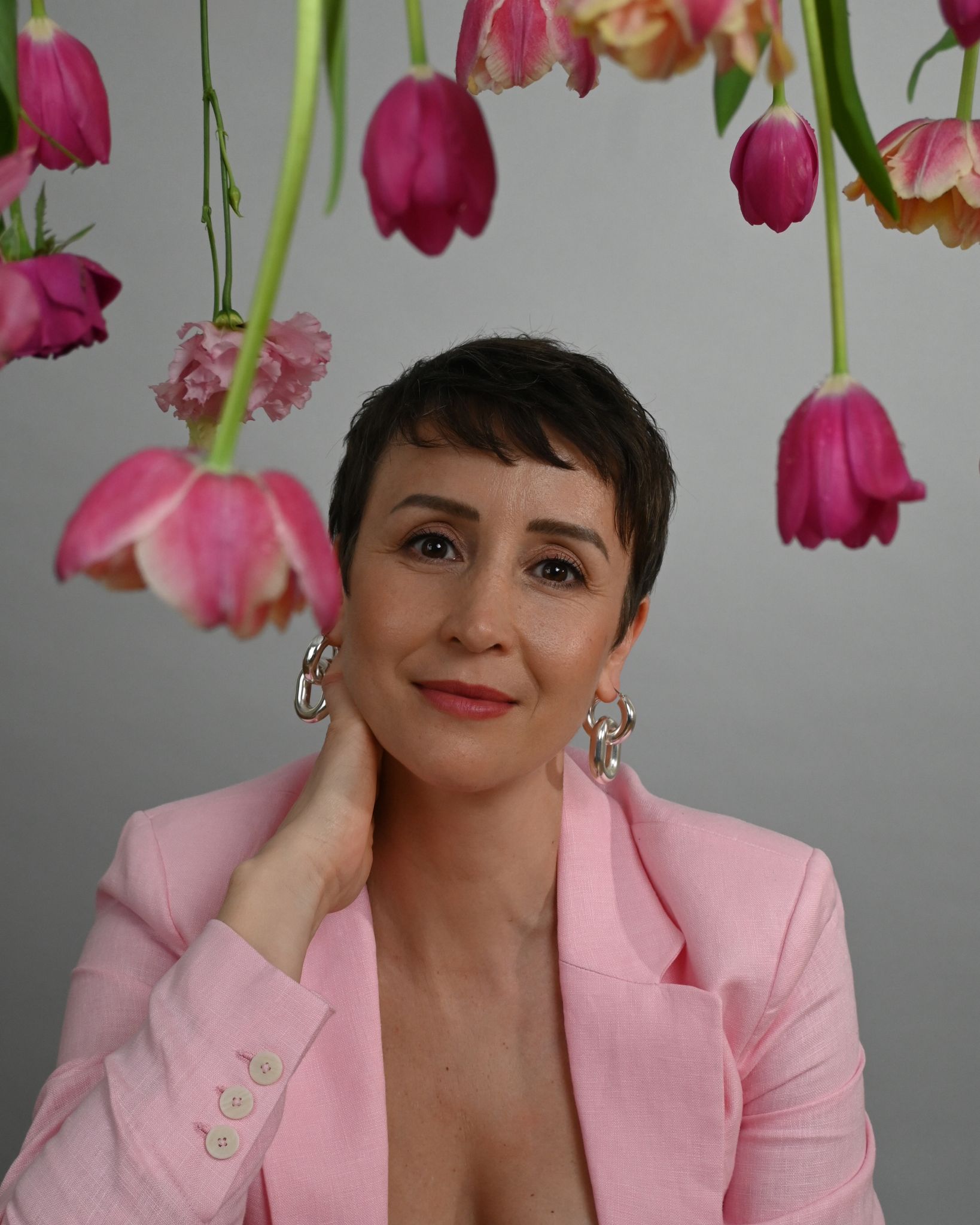

Single, Successful and Not Waiting: The Joke Everyone Gets Wrong About Miray Akovalıgil
Confidence Magazine Online Cover Interview
She was a successful lawyer at an international firm when she first stepped onto an open mic stage in 2015. This month, Miray Akovalıgil played the biggest show of her career at Zorlu, with her childhood idol watching from the audience. In an intimate conversation with our Founder and Editor, she talks about the persona she left behind, the father whose dreams she carried for years, and why her jokes about wanting a husband have been misunderstood all along.
When Miray Akovalıgil was a little girl, she would sit in front of the television watching Bir Demet Tiyatro, gripping the arm of the sofa so tightly that her nails dug into the fabric, and tell her mother that when she grew up, she was going to be Demet Akbağ.
It was the kind of thing children say, and the kind of thing parents smile at and gently put aside. Her family had no artists in it, and when her teachers assumed she would go on to the conservatoire, her parents worried, wanting her to have a secure profession first. Miray didn’t feel she had the courage to argue, so she studied law instead, and for almost a decade that little girl’s dream stayed exactly where she had left it.
This month, she walked onto the stage at Zorlu for the biggest show of her career so far, in front of a full house that had come to see her and her alone. And sitting among them was Demet Akbağ.
I can’t think of a more fitting way to begin this story, because it holds everything Miray spoke to me about when we sat down together: the dream she was once talked out of, the long road back to it, and what it means to finally stand in the light as the woman you were always meant to be.
I had watched almost every interview Miray had given before our conversation, and I noticed that nearly all of them circled the same subjects: her costumes, her colours, the way she fills a stage. It is understandable, because on stage she is impossible to ignore, but the more I watched, the more curious I became about the woman underneath all of that. So when we began, I told her plainly that I had no interest in talking about how she looks. I wanted to meet the woman who had cut her own path to that stage.
I also shared with her something I have come to believe through many years of watching people, in my own family, in my marriage and with my son: that every human being’s deepest desire is to be truly seen, understood and accepted exactly as they are, while becoming fully the person they are meant to be. Then I asked her whether the woman we see on stage is really her, or a performance.
Miray answered without hesitation. When she started out in 2015, she told me, the woman on stage was very much a persona, strong and sharp, with an answer for everything and a confidence that seemed untouchable. She wasn’t that woman yet. She was walking on stage as the woman she wanted to become.
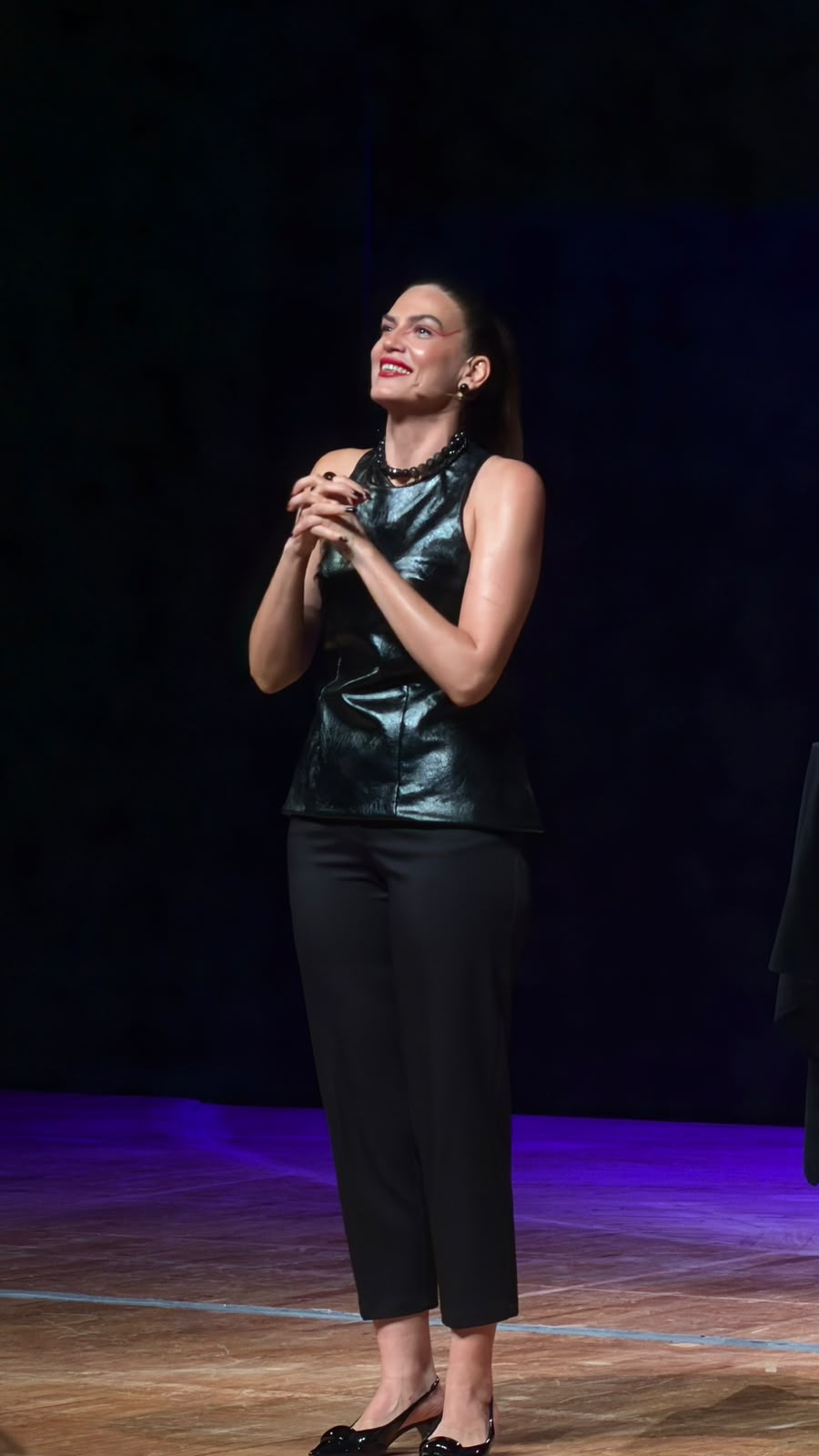
“I used to put on a show,” she says. “Now I’m simply myself.”
It is a striking admission from someone whose work is, in so many ways, about performing, and she is clear that the change didn’t happen under the stage lights. It happened in the years of work she did on herself away from them. She laughs as she describes how completely she threw herself into personal growth, the seminars and courses and the long, often uncomfortable process of looking inward, and for her that work was never theory. It was the bridge between imagining a different life and actually living one. Somewhere along the way, the persona and the person met, and the direct, unflinching woman who now looks her audience straight in the eye is no longer a costume she puts on before the show. She is simply who Miray has grown into, and there is real pride in her voice when she says so.
If you have followed Miray for any length of time, you will know that some of her most loved material is about being a single woman in her forties: the dates that go nowhere, the relatives who ask when she is getting married, the very public wish for a partner and perhaps a family of her own. Audiences adore it, and yet I have noticed how often it is misread. Somewhere between the stage and the comments section, a joke about wanting love has turned into a story about a woman who is desperate, forever out there searching for a husband, as though everything else she has built were simply a way of passing the time until he arrives.
So I asked her about it directly. I told her that, in my experience, people tend to separate over three things, power and control, care and closeness, respect and recognition, and that beneath all three I see that same longing to be seen, understood and accepted. Then I asked whether, as a strong woman who knows exactly who she is, she feels the weight of a society that still behaves as though every woman must marry, every woman must have children, and every woman without a partner needs some kind of explanation.
She didn’t pretend otherwise. As a single woman, she told me, she feels that social pressure all the time. And then she said something I have rarely heard a woman in the public eye say so plainly.
“Loneliness isn’t a choice,” she says. “It’s a result.”
She would love to share her life with someone, and she has never hidden that. But there is a world of difference between wanting love and putting your life on hold until it arrives, and Miray has made her decision about which side of that line she stands on.
“I’m not going to abandon my dreams halfway because of it.”
This, to me, is the part of her story that deserves far more attention than it gets. The woman who jokes about wanting a husband has spent the last ten years building a career from nothing, filling theatres across Turkey and Europe tour and now Zorlu itself, while still practising law alongside it. She hasn’t been waiting for anyone. She has been living, fully and courageously, and simply refusing to pretend that she wouldn’t welcome someone to share it with. Perhaps the real joke, then, is on all of us who keep asking successful women when they are getting married, as if a wedding were the only achievement that counts.
There was one part of Miray’s story I had been waiting to ask her about, because it touched something very close to my own heart.
She has spoken before about her father, a gifted man who studied architecture abroad, who could draw, play the guitar and light up any room he walked into, and who came home when his own father called him back to run the family business. For years, Miray believed he had been robbed of his dreams, and for years she fought to live them on his behalf, as though every success on stage might somehow make up for the life he never had.
I told her I understood that more than she might imagine. I lost my own father in May 2018, and it was only after he had gone that I realised how much of my life I had been living for his approval, phoning him after every achievement and waiting to hear him say he was proud of me. When that voice was no longer there, I had to learn to hear my own.
So I asked her: if her father were here, on the day she finally set that weight down, what would she want to tell him?
Her answer wasn’t the one I expected, and it was all the more moving for its honesty. She had misread him, she told me. She had never understood that keeping his talents to himself may well have been his own choice, and instead she had taken his story and used it as a whip, driving herself harder and harder in his name. The day she saw that clearly, everything changed. She stopped doing it for him and started doing it for herself.
“When I began building my dreams around myself,” she says, “the path opened.”
Neither of us said anything for a moment after that, because so many of us are still carrying someone else’s unlived life on our backs, whether it is a parent’s disappointment, a mother’s fear or a family’s idea of who we were supposed to become. Miray’s story is a reminder that love doesn’t ask us to live someone else’s dream, and that sometimes the most loving thing we can do for the people we have lost is finally to live our own. Knowing that, it is hard not to imagine what her father might have felt, had he been sitting at Zorlu alongside Demet Akbağ, watching his daughter take that stage for herself.
Most of us carry a story about how life is supposed to unfold: be sensible, choose the safe option, live up to what everyone expects of you. Miray lived that story for years. She was respected, successful and well paid at one of the most prestigious firms in her field, and yet a voice inside her kept insisting that this was not her path.
I asked her why she thinks so many women hear that same voice and choose to ignore it. Because it looks far too risky, she said. When you already have an established life, the idea of starting again from zero is genuinely frightening, and then there is the judgement, the fear of what everyone around you will say. She knows that fear first-hand. When she stepped away from the career so many people envied, the resistance was very real, and some of her former colleagues openly mocked her. But she had decided she was ready to pay that price, and she believes that willingness, rather than any absence of fear, is what makes the difference. Today, she says, she owes nobody an explanation.
I then asked her to speak directly to one of our readers, a woman perhaps in her fifties, sitting at her kitchen table with a dream she has carried for years and a growing certainty that it is far too late. What I admire about Miray’s answer is that she refused to sell her a fantasy. It isn’t easy, she said, it is very hard, and following your dream doesn’t mean handing in your notice tomorrow with nothing behind you. She never had the savings to do that herself. Instead, she built her new life alongside the old one, step by step, until it was strong enough to stand on its own, which is why, even now, she still goes into the law office the morning after a show. If you have the courage and the means to leap, wonderful, but if you don’t, you can still begin from exactly where you are.
Then she gave me the line that I suspect many of our readers will want to write down and keep.
“If you’re complaining, don’t do it. If you’re doing it, don’t complain.”
People are very good at complaining, she told me, and far less practised at continuing. But if you truly want something, you will find a way.
When I think back to the beginning of our conversation, I realise I had expected to spend the hour with a comedian, and instead I spent it with a woman who had done some of the hardest work any of us can do: the work of finding her way back to herself underneath the persona, the expectations of others and the stories she had inherited out of love. Perhaps that is why her audiences connect with her so deeply. They aren’t only laughing at the jokes. They are recognising a woman who, after years of living by other people’s rules, finally chose herself.
The little girl who gripped the sofa watching Demet Akbağ was once told, gently and lovingly, to choose something safer. This month, the woman she became stood on the stage at Zorlu with her idol in the audience. If that isn’t proof that it is never too late, I don’t know what is.
“Stop asking her when she’s getting married. She’s too busy living her life.”
So the next time someone asks Miray when she is getting married, I hope she smiles and tells them she is a little busy living her life. And I hope every woman reading this, whatever she has been told to wait for, remembers that her life is already happening, and that it is hers to live.
Elif Köse, Founder and Editor, Confidence Magazine