
Key Takeaways
- Recognise the Survival Mechanism: Know that your body is numbing itself as a way to prevent you from experiencing the intolerable pain of chronic stress. Be compassionate towards this separation and don’t get frustrated.
- Focus on Nervous System Regulation: Use diaphragmatic breathwork, body scanning, and Vagus nerve stimulation to let your brain know that it is safe and to come out of fight or flight.
- Do Gentle, Intuitive Movement: Steer clear of intense workouts that increase Cortisol. Try restorative yoga instead, stretching and walking, and move in a manner that matches your current ability level.
- Respect Small Physical Signals Of The Body Right Away: Rediscover trust in your body’s signals – always listen and act on simple physical needs, such as resting your eyes, taking a drink of water, or eating if you are hungry.
- Practise Fierce Boundaries: Recognise the need to take time off to rest and recuperate your body, and emphasise the importance of setting boundaries and saying no to certain experiences that can cause sensory overload.
Intro
When I got really burnt out, namely for my own brain, I realised that burnout is not just a mental phenomenon; it’s physical. We ignore all the signs of fatigue until one by one they are no longer noticed, and we feel like a ghost inside our skin. To get back into our bodies after burnout, all the steps we can take to get back home to ourselves gently are explored here.
Understanding the Disconnect: Why Burnout Alienates Us
I believe that, to begin the healing process, we first need to understand why we became disconnected. Burnout does not occur out of the blue. It’s simply a product of chronic stress, having no management of stress, and it keeps our nervous systems in that fight-or-flight and/or freeze mode. But staying in this heightened state on a long-term basis is not sustainable, and that’s when our bodies make a drastic decision to protect us.
The Physiology of Chronic Stress
Constant stress causes cortisol and adrenaline to be released by the adrenal glands. The racing heart, shallow breathing, and the tenseness in the shoulders are something I know all too well. Why do we embrace this as the norm, as our modern world favours doing more?
But this isn’t what the body is designed for. The sympathetic nervous system (or our ‘danger’ system) gets overstimulated. Because we can’t tolerate this physical experience of living in chronic anxiety, we start to turn down the volume, or the ‘dial’ on our physical awareness. We numb out.
Numbness as a Survival Mechanism
I hope you now understand that sensation of detaching from oneself is a splendid survival device and not a fault. When the physical feeling of weariness, tightness, fatigue, etc. gets too loud, the only option we have to get our work done and make our deadlines is to turn a blind ear. The mind/body connection was cut off.
Hunger pains we don’t think about, sleep we don’t need, and muscle pain we don’t care about. Typically, this dulled state of feeling allowed us to numb out during these turbulent years protectively, and identifying this is an excellent first step in learning how to reconnect with your body after burnout. To find that our body is willing to open up again, we have to first thank our body for protecting us.
The First Steps to Reconnection: Creating Safety
A frightened nervous system will not relax. When our physical re-connections are rushed, our body will just go back into a withdrawal. Body-based (somatic) recovery is built on grounding oneself in physical and emotional safety.
Redefining Rest Beyond Sleep
For a while, I believed that whenever we say that someone is resting, it actually meant that they are sleeping. However, when you are feeling the strain, you can sleep for a full 12 hours and still wake up feeling physically exhausted. Let’s discuss various forms of rest. Sensory rest is very important – that is, all screens have to be turned off, all lights have to be dimmed, and all loud sounds eliminated.
Emotional rest is something I highly recommend too, which is taking away people-pleasing from the picture and just doing nothing but being absent in people-pleasing and not in control of other people’s feelings. We offer our bodies a space of rest from the non-stop stimulus, and a cool atmosphere becomes available for physical sensations to emerge slowly.
Establishing Grounding Routines
Grounding, or coming back to the here and now, is an essential skill for learning how to get in touch with your body after a burnout. Simple and predictable routines help me when I feel untethered. It can be something as simple as a morning habit such as drinking warm water with lemon juice, feeling the warmth of the mug on your skin, and the feel of the water on your throat.
Routine is the signal to our primal brain that it’s safe; as soon as our body knows what to anticipate, it can stop being vigilant and start rebalancing.
Somatic Practices for Everyday Healing
Somatic practices are devoted to the internal experience of moving and experiencing movement, rather than the external form. It is not about exercising for fitness; it is about communicating with our nervous system.
The Power of Breathwork
Breath is the connection between the conscious and unconscious mind. I have shallow, upper-chest, tight breathing when I am stressed. So we need to make a conscious effort to retrain our diaphragms.
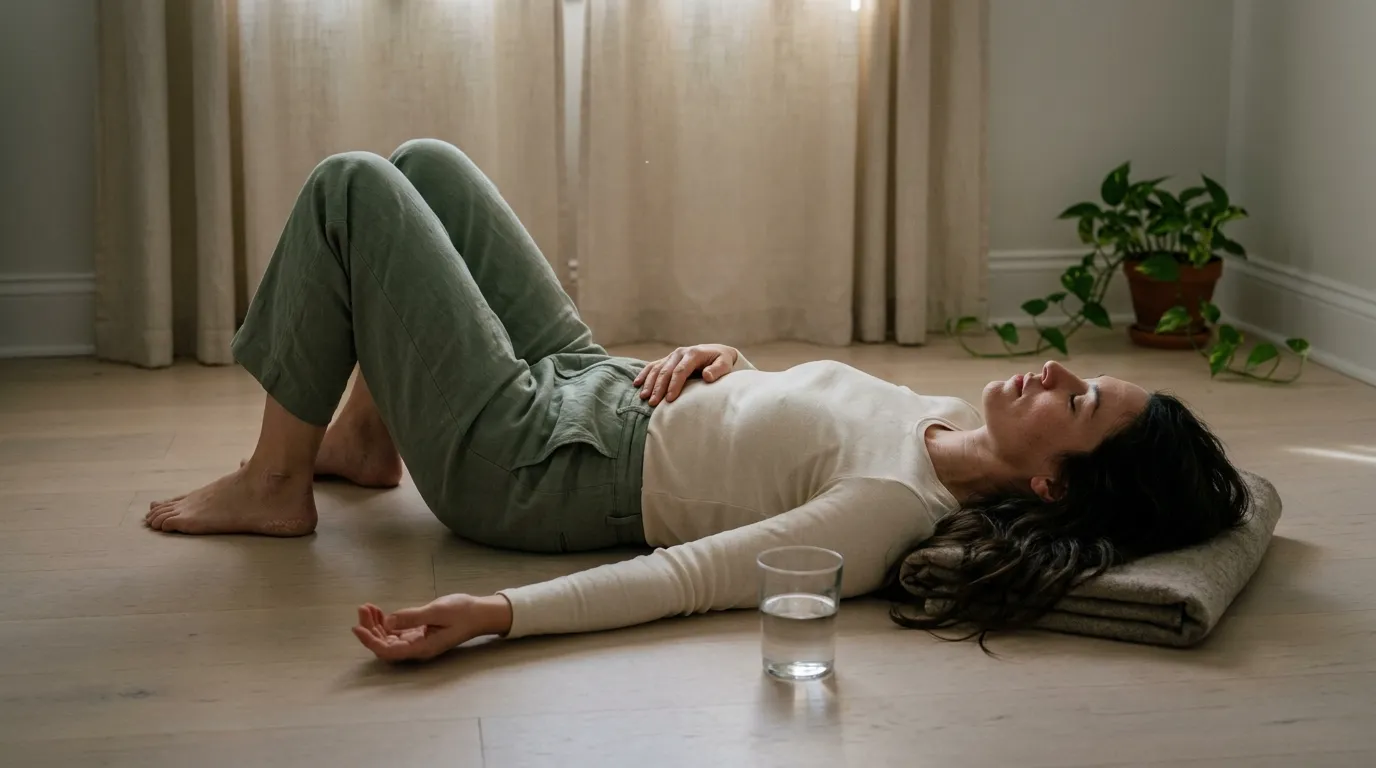
I would turn to diaphragmatic breathing, also known as belly breathing, to begin. Rest one hand over your chest and the other over your tummy. While breathing in through the nose, try to increase the movement of the hand on the abdomen and keep the hand on the thorax as still as possible. Slowly breathe out through your mouth. The breathing is deep and rhythmic in nature, providing stimulation to the ‘Vagus’ nerve that extends from the brainstem down to the abdomen. When the vagus nerve is activated, it serves as a biological brake and tells our nervous system that it is safe, instantly moving us into a “rest and digest” state.
Body Scanning Techniques
Conducting a body scan is a mindfulness exercise that allows you to explore your body, part by part, and become aware of what you feel without attempting to alter the feeling. The initial shock I felt when using this exercise during my burnout was that I could not feel particular areas of my body; they were completely blank.
To practise this, lie down in a comfortable place. With eyes closed, shift attention to feet. Check if warm, cold, tense, or relaxed. Take your attention up the legs from your feet, ankles, calves to your knees. Never panic when experiencing numbness; never force a feeling. Just admit the voidness and proceed. The point is not feeling; the point is simply being present and attentive. Over time, this practice changes the wiring in your brain between your brain and your body.
Gentle, Intuitive Movement
High-impact exercise, such as high-weight training or cardio, can sometimes make us unwell when we are recovering from burnout. These activities drive an already overloaded system to produce more cortisol. Rather, it’s about soft, feel-good motion.
It took me a long time to rehabilitate my body, with activities such as restorative yoga, stretching and tai chi. The word that is important with this is intuitive. When relocating, connect with your body and ask, “What’s needed now?” In some cases, the solution may be taking a gentle stroll in nature; in others, sitting down on the floor and doing neck rolls. Focus on letting your physical sensations determine movement as you do it, instead of imitating an exercise programme.
Nourishing the Physical Vessel
By reconnecting with your body, you will be offering it the building blocks it needs to repair any cellular damage that has been brought on by prolonged stress. Diet and hydration have a huge impact upon our nervous system.
Mindful Eating and Hydration
At the bottom of my “burnout” cycles, I used to eat mechanically. I would sit at my desk to eat; I wouldn’t taste it much, just getting food in me to keep going. To reconnect with your body after burnout, you need a complete paradigm shift about nourishment.
Mindful eating uses all of the senses. Smell and see the colours before eating. Chew slowly. Notice the textural details. This helps to digest – often that’s also disturbed in Burnout – and compels you to focus in the present.
The Role of Sleep Hygiene in Nervous System Regulation
You can’t heal a burnt-out body without good-quality sleep. When our nervous systems are wired, however, it can be very hard to fall asleep. A haven for rest must be established.
I switched up my sleep hygiene by enforcing an electronic curfew an hour before sleep. That blue light emitted by phones keeps us awake by shutting down our melatonin, causing our brains to think it is daytime. I use that hour to work on the things I have to do physically, in a soothing fashion: a warm bath with Epsom salts (magnesium eases tight muscles), a little gentle stretching, or reading a book. Having a cold, dark bedroom and using it only for sleep and sex helps train your body to relax when you enter your bedroom automatically.
Processing Stored Trauma and Stress
Psychology has the definition that “the body keeps the score”. Our bodies still retain tension, even after emotionally discarding a worrisome job, stressful project, or painful time. This one we must let go of ourselves.
Somatic Experiencing and Professional Support
Occasionally, the distance for connecting up is too great to cross on your own. It is highly recommended to find a somatic therapist if connecting to the feelings in your body causes too much panic, trauma, or emotional pain.
Somatic experiencing is a particular form of therapy that helps free up pent-up fight-or-flight energy in the body. A professional will be able to take you through subtle movements, which may also involve tracking exercises, to move this trapped energy safely without re-traumatising your system. There is no shame in using a guidebook to help you locate your physical body. My association with a trauma-informed practitioner was the thing that facilitated my healing to a greater degree than I could have done on my own.
Journalling and Emotional Release
Often I support the physical release by employing cognitive processing. So when that tightness in my chest, or knot in the pit of my stomach, comes up, I sit down with a journal, and I ask, “What does this tension have to tell me?”
When we get our thoughts and emotions down on paper, we move the chaos from our body to the paper. Also, allowing physical emotional expression – be it through crying, shaking, or safely screaming into a pillow can be very therapeutic. When animals escape in nature, they shake their bodies to get rid of the adrenaline! As humans, we can squander this tendency to fit in with the ‘giving the impression we have it all together’ time frame. Stress is a process that physical bodies must get through to its end.
Setting Boundaries to Protect Your Physical Energy
No matter how many somatic practices we find in the world and pursue, they will not help if they are the same causes of burnout. Reconnecting with your body, therefore, takes the form of learning to love it, because learning to protect it with fervour is how you put that love out to sea.
Learning to Say “No” Without Guilt
We do not feel the body so easily get connected to it, say yes to attachments that we cannot feel the physical hardship they place on us.
As you get more in tune with your body, you will begin to sense a physical response when you are asked to do something that you don’t have the resources to do. I feel it for myself as a kind of heaviness in the pit of my stomach or constriction in my throat.
We need to learn to listen to those messages from our bodies! Your body won’t rest; your mouth cannot say yes if you’re feeling the opposite. You don’t owe anybody an extensive justification. A plain old “I don’t have time for this right now” is a full sentence, and a single paring down of self was the best act of physical self-preservation.
Digital Detox and Sensory Deprivation
We live in a sensory minefield! Our nervous systems are always on high alert thanks to constant notifications, emails, bright lights, and the sound of the city. Our bodies require deliberately taking away our senses at times.
Steer clear of devices for fixed days (typically on the weekends). I switch my phone off, don’t use my computer, and turn down the news and media. You’re left with the void when you eliminate the constant flow of outside information. Initially, there may be much discomfort and anxiety in this silence. If you sit with it, however, at the end of that silence your inner physical voice becomes audible.
Summary
Burnout demands a kind of recovery, restoring the trust in our bodies which has been violated through chronic stress. Prioritising nervous system regulation with mindful breathwork and safely acknowledging small physical needs can help communicate to our bodies that the threat has passed.
Finally, by taking radical action to create strong boundaries and accepting ourselves in a kind and gentle way, we can begin to reconnect with our own physical energy and feel at home in our skin once more.