
Key Takeaways
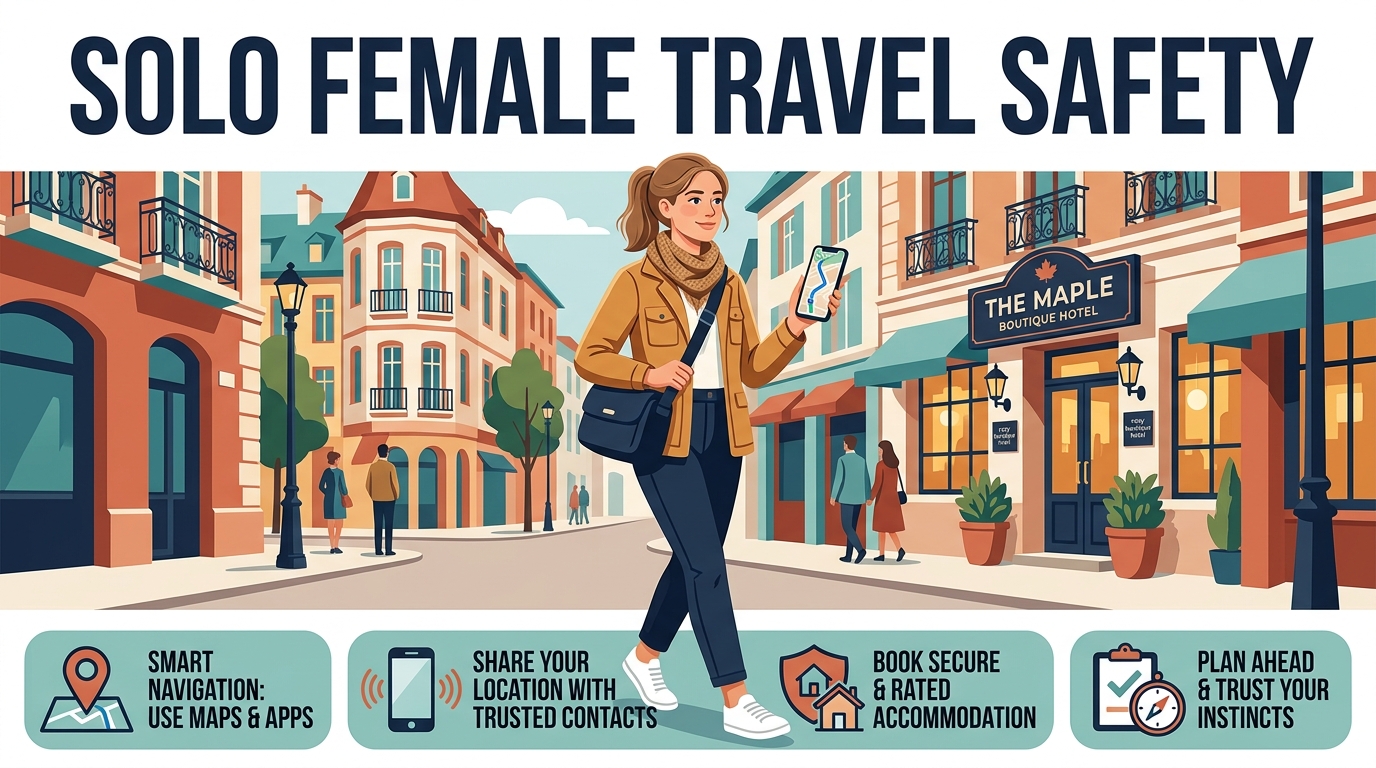
- Research goes further than instinct alone. Looking into neighborhood safety, local norms, and recent traveler reviews before booking prevents most avoidable issues.
- Where you stay matters as much as where you go. Choosing accommodations with strong security features and reviews from other solo female travelers makes a real difference.
- Staying connected is one of the highest-impact safety habits. A local SIM card and shared location with someone at home provide peace of mind and a fast path to help if needed.
- Trusting your instincts is always worth it. If something feels off, removing yourself from the situation immediately is never an overreaction.
- Solo doesn’t have to mean isolated. Group tours, social accommodations, and other travelers can add both safety and connection to a solo trip.
Intro
Traveling solo as a woman is one of the most empowering things I’ve ever done, but it also comes with a different set of considerations than traveling with a partner or group. Over the years, we’ve learned that a little preparation goes a long way toward feeling confident and safe, no matter the destination. Here are the best travel safety tips I rely on for solo female travel.
Why Safety Planning Matters for Solo Female Travelers
The Reality of Traveling Alone as a Woman
I’ve found that solo travel is overwhelmingly positive, but it does require a bit more situational awareness than traveling with others.
- Unwanted attention can happen more frequently when traveling alone, especially in unfamiliar cities
- Limited backup means there’s no travel partner to immediately lean on if something feels off
- Cultural differences around gender norms can affect how comfortable certain situations feel, depending on the destination
- Peace of mind genuinely improves the entire trip, which is why I treat safety planning as part of the fun, not a burden
What I’ve Learned from Years of Solo Trips
- Most solo female travelers, myself included, report feeling safe the vast majority of the time when basic precautions are in place
- A little preparation before the trip prevents far more stress than trying to problem-solve in the moment
- Confidence and awareness go a long way — I’ve noticed that walking with purpose and avoiding obvious distraction (like staring at my phone) genuinely changes how people approach me
Researching Your Destination Before You Go
What I Always Look Into First
Before booking anything, I spend time researching the specific safety landscape of my destination, not just general reviews.
- Government travel advisories for the specific country or region I’m visiting
- Local laws and cultural norms around dress, behavior, and gender expectations
- Common scams targeting tourists, which I look up specifically for solo travelers
- Recent news or safety updates, especially for destinations with rapidly changing conditions
Neighborhood-Level Research
- I use online maps and forums to identify which neighborhoods are considered safe for walking at night
- I read recent reviews from other solo female travelers on accommodation listings, since their perspective is often more relevant than a general review
- I look for a hotel or rental within walking distance of well-lit, populated areas rather than isolated on the edge of town
Choosing Safe Accommodation
What I Prioritize When Booking
We’ve found that where you stay has a bigger impact on overall safety than almost any other single decision.
- 24-hour front desk or reception, which adds a layer of security and someone to contact if needed
- Reviews specifically from solo female travelers, since their comfort level is the most relevant benchmark
- Well-lit entrances and hallways, which I check for in photos or ask about directly
- Central, well-populated locations, even if it costs slightly more than a cheaper option on the outskirts
Questions I Ask Before Booking
- Is the accommodation in a walkable, populated area at night?
- Does the listing include recent reviews mentioning safety specifically?
- Is there a secure lock on the door, and ideally an in-room safe for valuables?
- If staying in a hostel, are there female-only dorm options available?
Packing Smart for Safety
Items I Never Travel Without
A few specific items have made a noticeable difference in how secure I feel while traveling alone.
- A portable door lock or door stop alarm, which adds an extra layer of security in hotel rooms
- A money belt or hidden pouch for cash, cards, and my passport, worn under clothing rather than in an outside bag
- A whistle or personal safety alarm, kept easily accessible in a jacket pocket or bag strap
- A crossbody bag with a zippered, slash-resistant strap, which is far harder for a pickpocket to grab than a shoulder bag
Dressing to Blend In
- I research local dress norms before I go and pack accordingly, especially in more conservative destinations
- I avoid clothing or accessories that clearly signal “tourist,” which can sometimes draw unwanted attention
- I keep flashy jewelry to a minimum, opting for simple pieces that don’t attract extra attention
Staying Connected and Sharing Your Location
How I Stay in Touch While Traveling
Staying connected has completely changed how safe solo travel feels, especially compared to trips I took years ago without reliable data access.
- I purchase a local SIM card or international data plan immediately upon arrival so I’m never without a way to contact someone
- I share my live location with a trusted friend or family member through a location-sharing app for the duration of the trip
- I send a daily check-in message to someone at home, even if it’s just a quick “all good today”
Building a Communication Plan
- Before I leave, I share my full itinerary, including flights, accommodations, and any major activities, with someone I trust
- I set a general check-in schedule, so if I go quiet for an unusually long period, someone knows to follow up
- I save local emergency numbers and my embassy’s contact information directly in my phone before arriving
Navigating Transportation Safely
Getting Around Without Unnecessary Risk
Transportation is one area where I’m especially cautious, since it’s often where solo travelers are most vulnerable.
- I use official taxi apps or pre-booked transportation rather than hailing unmarked cabs on the street
- I confirm the driver’s name and license plate match the app before getting in
- I sit in the back seat rather than the front, which creates a bit more distance and an easier exit if needed
- I avoid traveling alone late at night when possible, opting instead to plan activities that end before dark in unfamiliar areas
Public Transit Tips
- I research the specific safety reputation of public transit in each destination before relying on it
- I stay near the driver or conductor, or in well-populated train cars, rather than isolated sections
- I keep my bag in front of my body and zipped at all times when riding crowded buses or trains
Trusting Your Instincts
Why I Never Override a Gut Feeling
One of the most valuable lessons I’ve learned through solo travel is that my instincts are almost always right, even when I can’t immediately explain why something feels off.
- If a situation, person, or place feels wrong, I remove myself immediately rather than trying to be polite
- I’ve learned it’s completely acceptable to lie about my plans if a stranger asks too many personal questions, such as saying I’m meeting a friend nearby
- I avoid oversharing details about staying alone or my exact accommodation with strangers I’ve just met
Practicing Confident Body Language
- I walk with purpose, even when I’m not entirely sure where I’m going, rather than appearing visibly lost
- I keep my phone in my pocket rather than constantly checking it while walking, which helps me stay more aware of my surroundings
- I make brief eye contact and offer a firm “no thank you” when declining unwanted attention, rather than avoiding eye contact entirely
Managing Money and Valuables
How I Protect My Finances While Traveling
- I bring at least two payment methods, stored separately, in case one card is lost, stolen, or doesn’t work
- I keep a small amount of backup cash hidden separately from my main wallet
- I avoid displaying large amounts of cash in public, especially at ATMs, which I try to use during daylight hours in populated areas
- I photograph or scan important documents, like my passport, and store copies in a secure cloud folder before I leave
Reducing Theft Risk
- I use a bag with secure, zippered compartments rather than open totes for daily excursions
- I avoid setting my phone or wallet down on outdoor café tables, keeping them in a bag or pocket instead
- I stay especially alert in crowded tourist areas, which are common targets for pickpocketing
Handling Unwanted Attention
My Approach to Setting Boundaries
- I respond to unwanted attention firmly and directly rather than trying to appear polite out of social pressure
- I move toward a public, populated space, like a shop or restaurant, if I feel uncomfortable rather than continuing to walk alone
- I’ve learned to wear a wedding-style ring or mention a fictional partner in some situations, simply because it can reduce certain types of unwanted attention in specific cultural contexts
When to Involve Others
- I don’t hesitate to approach hotel staff, shop owners, or even other travelers if I need help or feel unsafe
- I look for a police officer or a marked official if a situation escalates beyond what I can resolve on my own
- I remind myself that asking for help isn’t an overreaction — it’s a normal part of staying safe
Preparing for Emergencies
What I Set Up Before Every Trip
- I purchase travel insurance that specifically covers emergency medical care and evacuation
- I research the location of the nearest hospital or clinic to my accommodation upon arrival
- I save my embassy’s address and emergency contact number directly in my phone
- I keep a printed copy of important documents and emergency contacts in my bag, separate from my phone, in case of a dead battery or theft
My Basic Emergency Kit
- A small first-aid kit with essentials like pain relievers and any personal medications
- A portable phone charger, since a dead phone in an emergency is one of my biggest fears while traveling alone
- A written list of emergency contacts and important numbers, in case my phone is lost or stolen
- A copy of my travel insurance policy number and provider contact information
Connecting with Other Travelers
Why I Don’t Always Travel “Alone”
Solo travel doesn’t have to mean isolated travel, and I’ve found that connecting with others along the way adds both safety and enjoyment.
- I join group tours or day trips for activities in less familiar or higher-risk areas
- I stay at social hostels or accommodations with common spaces when I want to meet other travelers
- I use travel-specific apps and forums designed to connect solo travelers, especially other women, for shared activities or meals
Building a Local Support Network
- I ask my accommodation hosts for their honest, personal safety recommendations upon arrival
- I connect with other solo female travelers I meet along the way, since we often end up sharing useful, up-to-date local advice
- I look into local women’s travel groups or expat communities, which can offer valuable, real-time local insight
Frequently Asked Questions
Is solo female travel safe?
In my experience, solo female travel is safe the overwhelming majority of the time when basic precautions, like researching accommodations and staying connected, are part of the plan.
What is the most important safety item for solo female travelers?
A reliable way to stay connected, such as a local SIM card or international data plan, tends to make the biggest overall difference, since it allows for location sharing and immediate communication if needed.
How do I handle unwanted attention while traveling alone?
I respond firmly and directly, move toward a populated public space if needed, and don’t hesitate to involve hotel staff or other trusted people nearby if the situation escalates.
Should solo female travelers avoid public transportation?
Not necessarily. Public transportation is generally safe in most well-reviewed destinations, but I recommend researching its specific reputation beforehand and staying in populated, well-lit sections.